Monday, 30 August 2010

People Above The Place

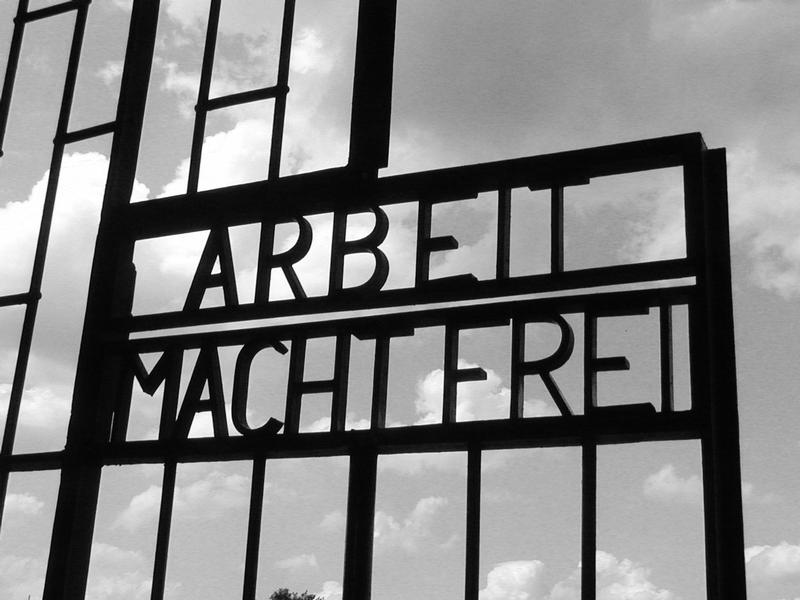
There used to be a sign on the jail by the Dubai Petroleum building in Jumeirah that read something like, 'The Person Above the Place'. It always struck me as a tad odd in that context, a little like putting 'Arbeit Macht Frei' on the front of a concentration camp, although it's nothing like as strange as the heading on Dubai Police's website, 'O, mindly people consider', which has always rather tickled me.

I interviewed prominent Emirati businessman Ali Al Bawardi some years ago and recall being struck at the time by his assertion that all too often, businesses here invested in the place over the people - throwing up world class infrastructure but then bringing in cheap, unqualified and under-empowered people to operate that infrastructure, often with poor management to oversee them. Result: world class infrastructure that doesn't work very well.

It's a thought that came to mind over the weekend as a routine checkup once again brought me into contact with the excellent medical staff, superb facilities and bumbling, plodding administration of the American Hospital in Dubai.

It's an odd type of materialism, this belief in the solidity and value of physical infrastructure rather than human capital. In part, it must be driven by the transience of the human component - you don't invest in people or develop them, you just buy them in when you need them. Because they're only temporary, they're not trusted (and only trusted staff are empowered staff) and so they are forced to conform to rote systems and have no power to deal with any eventuality that falls outside that system.

This is all very fine and dandy, but we're left to deal with the result of this process as it gazes at the screen, drooling and clicking away listlessly, trying to avoid coming to the moment when it has to look up and accept that yes, they've goofed everything up and no, there's nothing that can be done.

Thursday, 19 August 2010

Re-intermediation

IMG_0720Image by Daniel Wilder via Flickr
I often speak at conferences, workshops and things and rarely miss the opportunity to laud Emirates Airline, typically using it as an example of advocacy (the fourth step in communication, wake up at the back). I advocate Emirates passionately - it has long been my airline of strong preference.

Perhaps interestingly, EK has my loyalty despite its customer loyalty scheme, Skywards, rather than because of it. For some reason Skywards always manages to make me feel like a beggar. I will never forget my first attempt to redeem airmiles, which resulted in me being thrown out of the business class queue at QAIA in Jordan and told to queue in economy (the upgrade they had confirmed to me wasn't on the system), turning to find one of my clients standing behind me and witness to my seeming pathetic attempt to scab an upgrade I wasn't entitled to. And I will never forgive them for the fact that we should have been checking into Emirates' rather lavish and wonderful Al Maha desert resort this afternoon for Sarah's birthday, but will be going out to dinner instead.

Skywards ticks all the right boxes - it's got a funky website, has lots of 'rewards' and is pleasingly automated - to the point where it's not really a hassle and can even provide the occasional pleasant surprise.Similarly, it can also let you down totally and really screw things up. The latter is a shame, but it's made even worse by the high levels of automation that Skywards employs. When the going gets tough, you get re-intermediated.

I have often wittered on about dis-intermediation, the phenomenon whereby technology removes the middle man and gives us direct access to the stuff we want. It's something I have come to think of as an empowering process - I can research and book my own holiday online, for instance, rather than depending on a travel agent. Similarly, you can buy music online rather than have to go to a shop and buy a CD.

Dis-intermediation is not only empowering for the end user, it also cuts out 'gatekeepers' - the people who sit in the middle and make choices for us - it's the threat hanging over the heads of record companies, publishers and newspaper proprietors. The democratisation of consumer choice, Internet advocates will queue up to tell you, is a positive benefit of technology.

But technology has introduced a new class of intermediary: the call centre. The thinking goes something like this: "Our staff are beings of pure energy who have jobs to do and can't be constantly interrupted by base, carbon based life-forms. Let's outsource talking to our customers and then our people can get on with doing useful things that make us money."

This is why you can't actually speak to anyone who works in your bank's branch anymore, why a call to your London telco routes you to Bangalore and why someone sitting in front of a terminal in Cairo is looking through your credit card statement 'to try and help you resolve this, sir'. These are the re-intermediators, the new middlemen.

So when Skywards fails to make the booking at its Al Maha Desert Resort and Spa despite the failure being clearly and wholly on their part, the people responsible for the booking suddenly fail to respond to emails. Your only recourse is to the call centre, which is staffed by people that can't actually do anything, they can only route requests over the system. They can tell you that they're sorry (how awful, to have to be constantly sorry for others' mistakes) but they can't actually let you talk to anyone responsible. They're the new front line troops, the poor saps that have to sit in a soulless room filled with other operators, being abused by irate people while the incompetent buffoons who are screwing things up never even hear the howls of agony from frustrated, unhappy customers and obviously feel completely free to totally ignore any other form of communication.

The technology that is empowering us is also disempowering us, taking away our choices and our right to expect people executing transactions on our behalf to respond to us and for them to take some sort of responsibility for their actions. And while automating customer service is no bad thing 98% of the time, there surely has to be a better way of dealing with the 2% of instances where rote, scripts and process will not do the job. It's one of the reasons why companies using Twitter as a customer service tool are finding they are met with an initial wave of frustrated customers and then a collective sigh of relief followed by cheering. We just need someone to take some sort of responsibility and fix the mess that's making us unhappy.

We're all missing a human to talk to.
Enhanced by Zemanta

Monday, 16 August 2010

Hiked

CoinsImage by Qiao-Da-Ye賽門譙大爺 via Flickr
Sharjah taxi fares are on the rise again - today's papers  carry the joyous news that a minimum fare of Dhs10 will now apply for any taxi journey and that the tariff will increase from Dhs1 per 650 metres to Dhs1 per 620 metres. The reason is, apparently, the franchise companies (who always seem to get cited when the fares are raised rather than Sharjah Transport, the body that is responsible for deciding the hikes).

The Dhs10 minimum charge has been in place in Dubai for some time, but it does seem a tad odd that in Sharjah we are now going to pay a minimum of Dhs10 for any journey when, back in the good old days of yore, private taxis were regulated to having to accept Dhs5 for any journey within the emirate. Ah, the good old days of yore, eh?

Sharjah Transport told Gulf News and others that the rises in the petrol price were to blame, which isn't unreasonable given that fuel prices have gone up by something like 25% this year (based on my Dhs80 going up to Dhs100 to fill up da Paj at ADNOC). However, this is the second price hike this year, the tariff used to be Dhs1 per 800 metres - and with drivers' fuel expenditures and empty/fare ratio carefully capped and monitored by the franchise companies, the new price rises should more than offset any fuel price rises.

Interesting, perhaps, that the anecdotal evidence of regular cabbie Mr G is that it's the bus services that are hurting more than the fuel price hikes. With the merry little yellow Brazilian 'Busscar' buses steadily plying their routes all over Sharjah for no more than a handful of coins, many people have been opting for public transport. With these rises, you could only draw the conclusion that more will join them and the drivers are going to get squeezed even harder.

I can't see the normally somewhat lugubrious Mr G being too happy about this one...
Enhanced by Zemanta

Sunday, 15 August 2010

Spangles

Glitter 1Image by Johnny Grim via Flickr
The tradition of scattering little pieces of glass all over the roads during Ramadan sadly seems set to continue this year. Driving past a smashed car on the Deira side of Business Bay bridge this morning, the driver apparently alive but nursing a nasty nosebleed, I was only surprised that it was the first major accident I have actually witnessed in the first days of this long, hot fast. I know it won't be the last - in fact, three people have already died on Dubai's roads in the first three days of Ramadan.

This Ramadan is a trial indeed - the Fajr prayer which commences the fast takes place at around 4.30am and Maghrib, the prayer that marks Iftar, the breaking of the fast, takes place at around 6.50pm - so people are fasting for something a little over fourteen hours a day. The fast means that nothing may pass your lips, so we're talking no eating, drinking (no, not even water) or smoking. When the ambient temperature's creeping into the mid forties (that's 110F to Americans), fourteen hours is long, long time. And it's debilitating - as the days pass, the cumulative effect on people's systems is plain to see.

A road full of tired, distracted and physically weakened drivers means that everyone has a huge additional duty of care - not only those fasting, but those who are not but who could give their fellow drivers a little more leeway than usual.

Dubai's Road and Transport Authority has launched an awareness campaign designed to highlight the extra care that drivers should take in Ramadan, which appears to consist of some leaflets (according to this story in Gulf News) and using the traffic information system displays. The need for these huge and no doubt expensive displays have long mystified me, although I'm sure I'm alone in thinking of them as Mostly Pointless. Everyone else no doubt likes the occasional aphorism, national day greeting and, very occasionally, advice that the traffic is slow - usually the only entertainment while waiting in the tailback stretching under the sign.

Today's message reads, in English, "Take care of other's fault" - and yes, I am so small-minded as to complain about the illiterate rendering of the message. Whether you should be exhorted to take care of others' faults or looking to take more care yourself is also worthy of debate.

But a few leaflets and a wonky message are simply not enough. Between the tolls and fees it raises, the RTA must surely have the resources to launch a serious public awareness campaign that could at least have a chance of alleviating this awful and totally avoidable carnage.

One component of it could be a concerted effort to create a strong moral climate condemning the fools putting others' lives at risk when they dash carelessly home for Iftar, seemingly convinced for some reason that they are rendered temporarily immune from the consequences of their selfishness.
Enhanced by Zemanta

Sunday, 1 August 2010

The UAE BlackBerry Ban: Barmy

A photograph of the BlackBerry CurveImage via Wikipedia
Why does all the fun happen when I'm away? Woke up today to the news that the UAE is to block BlackBerry Messenger, BlackBerry E-mail and BlackBerry web-browsing following a ruling by telecom regulator the TRA.

Gulf News online reports the story, which WAM broke today as far as I can see from over here. The National's story is here. Etisalat has made a statement which includes the immortal words, "BlackBerry data is immediately exported off-shore, where it is managed by a foreign, commercial organisation."

Oh, the LOLs, from a country where all requests to browse the web are immediately referenced to, errr, foreign, commercial organisations. Unless something's changed since the McAfee acquisition, US security company Secure Computing used to parse all searches to make sure that we weren't being exposed to all the naughtiness and stuff that's out there. We weren't so shy about 'foreign commercial organisations' then, were we folks?

BlackBerry customers were, infamously, not subject to the arbitrary restrictions of the block list. Many will remember the furore that erupted, extensively discussed on this very blog, which appeared to be a muckle-headed attempt on the part of the Telco That Likes To Say Ugh, Etisalat, to cludge security software intended for other purposes into an attempt to introduce surveillance and monitoring capabilities to the otherwise hard to intercept BB.


It's interesting for telecom regulation watchers that the customer is to be harmed extensively as a result of this move by a regulator, a class of organisation that is everywhere in the world tasked with holding the customers interests as one of its primary goals. The Telcos are being forced to breach their compact with their users (The vast majority of people bought BlackBerrys precisely with this very functionality as their primary reason for buying in) and tens of thousands of devices have been rendered basically unfit for purpose overnight.

I look forward to this move being 'clarified'. As it stands, it's yet another attempt to bomb ourselves back into the digital stone age. The madness of it all is that nothing has changed about the BlackBerry or the way in which the device works - and nothing has changed (correct me, please, if I'm wrong) in the 'moral and cultural' environment, or indeed the regulatory environment, since the BB was first introduced to the UAE - it has always worked using the company's own servers which underpinned the very services that CrackBerry users find so very appealing. If you can't live with it now - you shouldn't have sold it to us back then.

Will customers be offered refunds for the now barely functional hunks of black and chrome plastic they hold in their hands? Or will Etisalat and Du be offering free plastic covers that say 'I am browsing happily. Carry on as normal.'???

PS: In a move that appears to highlight that this move is being prompted by security concerns more than anything else, WAM has published an odd document that purports to 'compare the existing telecom regulations of the US, UK and UAE' but which is actually something of a 'dossier' that appears intended to justify the idea that a regulator can just turn around and delete a service being accessed by tens of thousands of consumers. It's a long read, but it's here.

Right. I'm going back on holiday...