Saturday, 1 February 2020

The Triumph of the Call Centre


It is my lot to have to deal, because in some ways I live a complex life, with a number of banking institutions on a regular basis. In short, I have four banks. I know, I know, it's just worked out that way and there's nothing to be done about it. Two of them, UK based, are highly competent organisations that do the stuff you need, when you need it.

I was arguing this morning with a certain local bank from the smallest emirate, who had set out to destroy my life and otherwise poke me with sharp sticks until I explode. The manager, to resolve the frustrating situation entirely of their making, called the call centre.

This is the third occasion in recent times that someone from a bank who is facing me across a desk has called the call centre to actually, you know do something. Although this act in itself presages the disintermediation of the carbon-based life form in front of me (quite satisfying really, a little like being able to gesture at them with an imperious wave and have them disappear in a puff of smoke with a sort of poofff sound), it is something of a worry.

Call centres are the modern equivalent of Roman Triremes, enormous ships packed with slaves tethered to oars and made to work by the application of copious lashes and a kettle drum. They are staffed by interns and other marginalised segments of society (out of work actors, former travel agents and record company executives), utterly disempowered and driven only by the need to recite the scripts they have been provided with. 'Is there anything else I can help you with today?' invariably ending the call where they haven't been able to help you.

They are where customers are sent to be ignored and frustrated. They are the dregs, the bowels of the earth. They are the people we shout at when we're angry with a company (usually, but not always, a bank or a telco), who take the abuse so that their management and witless marketing teams can go on behaving as if the company is at least nodding at the idea of behaving decently and with the slightest of intentions towards fulfilling some degree of what is laughingly described by corporates as 'customer service'.

So what if these IVRs, drones, bots and under-rated call handlers become the only interface to the customer? If there's no such thing as an empowered human being you can deal with? And what, then, of the 'promise of AI' in customer service?

What if we have reduced the customer experience so much that it's not really about technology developing and reaching up to equal great customer service, but customer expectations and experience being downgraded to the point where semi-evolved technology is good enough?

What then?

Tuesday, 14 January 2020

In Plain Sight - Five Places You Probably Didn't Know Were Even There

The landscape of the Emirates is dotted with little bits of history: a murabaa (watch tower) speaks of a conflict between emirates or tribes here, a wall reminds us of a war there. Sometimes we find ancient ruins, millennia old, sometimes we can stumble across an Iron Age fort or two. And sometimes we can find memories so fresh they still hurt - and yet they're carved in the landscape around us. Such is history.

So here are five to watch out for - these particular examples are ancient places that speak to the distant past, but which you've probably driven by time and again without realising anything was even there. You can visit, or just take a spin on Google maps and see what there is to see from a satellite.

Most of these sites (well, all except Jebel Buhais) are fenced off, so you can't actually do anything once you get there, except perhaps fly a drone over and take some snaps (watch out for no fly zones), but you can impress friends by even knowing there's a thing there! The links in the names are Google pins...


Muwaileh
A key Iron Age settlement, Muwaileh is an archaeological site in the middle of a residential area just off the Sharjah University City campus. It was here that researchers found evidence of Iron Age collective authority developing around water resources, of the domestication of the camel and one of a very few objects found that date back to the Emirates' virtually iron-free Iron Age - most of the metals we find from this era of the country's history are copper, bronze or precious trinkets in silver or gold.


Ed Dur
The site at Ed-Dur is actually an important pre-Islamic city. Ed-Dur has been put forward as Pliny’s Omana ‘a harbour of great importance in Carmania’. Carmania was a Persian province under Alexander the Great which stretched along the coast from Bandar Lengeh to Bandar Jask on the Persian shore. Ed-Dur is linked tightly to its 'sister city' of Mleiha, inland of Sharjah.

Ed Dur is most likely one you've passed many times as it's on the coastal route north of Umm Al Quwain to Ras Al Khaimah - many expats will know it as the Road To The Barracuda. It was at Ed-Dur that archaeologists found the first use of alabaster as windows, as well as extensive finds of weapons, jewellery, coins and other artefacts that point to an flourishing in an era under Hellenistic influence and a decline and fall, likely to the Sasanians in or around the 3rd Century BCE.

In its blossoming, it was a sprawling settlement greater in area than 1st Century London. One of the key finds here was a temple dedicated to the Sun God, Shamas - and the earliest surviving evidence we yet have of the written word in the land of the Emirates.


Sheba's Palace (Shimal Fort)
The area around Julfar (the precursor city to Ras Al Khaimah, but NOT 'old' Ras Al Khaimah, although the city has expanded to encompass the area of ancient Julfar) is rich in Islamic era settlements, spanning the 900s and first millennium settlement at Jazirat Al Hulayla, the fortress of Shimal, dating to the 1100s (known today as Sheba’s Palace) and farms in the Wadi Haqil.

This development of agricultural resources inland of the port town is mirrored at Sohar in Oman, where at around the same time we see extensive development taking place along the Wadi Al Jizi, the route from Sohar inland to Buraimi. Here's a drone shot:


Shimal fort is pretty impressive, but also pretty inaccessible, sadly. Your best bet is a drone or a pretty hectic scramble around the rocky escarpment it sits on, with a fine view of the extensive plains of ghaf trees below it. The area's settled now and it would be wise to bear in mind that you're intruding on private life if you do decide to go biffing around the place.


Jebel Buhais
The important and extensive necropolis of Buhais encompasses burials from pretty much every pre-Islamic era with the sole - and deeply puzzling - exception of the Umm Al Nar period. Many of the burial sites here have been at least roofed over - and some key finds have been removed to Sharjah Archaeological Museum. Right in the middle of the extensive area of burials dotted across the east-facing face of the outcrop of Buhais is an Iron Age fort, first excavated by an Iraqi team in 1974. Again, a drone shot:


Above: The Iron Age Fort at Buhais


Al Sufouh
The Al Sufouh Archaeological Site is perhaps the maddest of the lot - it's bang in the centre of the residential neighbourhood inland of the Palm Jumeirah and it includes an important Umm Al Nar tomb, which you can see to the centre right of the Google image above. It's a classic shape, better seen from this drone shot of the Umm Al Nar tomb at Mleiha Archaeological Centre:


So there you have it. Just five of five hundred or more places around the Emirates where you'll find the past is hidden in plain sight.

We'll be talking about this sort of stuff on the 7th February at the Emirates Airline Festival of Literature, in a session where I'll be 'In conversation with Peter Hellyer' about the history of the UAE.


Sunday, 12 January 2020

Children of the Seven Sands to be at the LitFest Shock Horror


Well, it would appear as if 5pm on Friday the 7th of February is the time to be at the Intercon Festival City.

That's when I'll be joining History Ninja Peter Hellyer to talk about the history of the Emirates in general and, of course, Children of the Seven Sands in particular. The book launches, and will be in the shops from 02/02/2020 - but the LitFest session's on the 7th.

What's the plan?

Well, for a start you're going to find out there's a hell of a lot more lurking below the surface of the UAE than you ever thought. We're going to visit the Garden of Eden and poke about around Noah's Arc and biblical floods - just for starters.

We'll be wandering around ancient Sumeria and finding out about the first intercontinental human trade network, which centred around this here place where we live.

We're going to look at the death of 10,000 men in Dibba, the Arab monopoly of trade with the East and the mystical city of C14th Hormuz - a strange island out of a fantasy novel, totally without water, brilliantly flecked by minerals and built around a salt mountain; home to over 50,000 people of sophisticated tastes and cosmopolitan ideals.

We're going to steep ourselves in the blood and agony of the Portuguese conquests of Arabia and the Arab trading networks that spanned the Seven Seas, in the Arab revolt that followed and the British suppression of their local Arab trading competitors and forceful domination of the Gulf.

We're going to wander around the wild hinterland of the Emirates and meet Bedouin tribes, explore the ancient port of Julphar and examine the wars and conflicts that shaped the modern Emirates.

And we're going to play around with stories of the past - of Zayed the Great, who killed the Ruler of Sharjah in hand to hand conflict, of Abdulrahman of Al Heera, one of the stormiest and most feared - and respected figures of the Trucial Coast and of the leaders who ruled the Trucial States under British protection and in the face of plague, drought, famine and - occasionally - plenty.

We're going to learn about the British invasion and bombardment of Dubai in 1910, the battle to establish an airport in Sharjah and the wars between the Emirates of the coast. And we're going to steep ourselves in intrigue, coups and counter-coups as well as heroes and tales of derring-do. We'll learn about oil and the colourful figures who stalked the Emirates holding concessions under the noses of Rulers brought up to a lifetime's haggling in the souk and minded to drive a hard bargain.

We're going to find out that the story about the end of the pearl market in 1929 because of the cultured pearl and the Great Depression is pure bunkum - and how the whole silly tale sprang up in the first place. And we're going to find out what happens when you fire an Exocet missile at a ship carrying 400,000 tonnes of oil. And no, it doesn't explode. We're going on a journey to the past - a past you didn't know was there under your nose.

It's going to be a roller-coaster, without a doubt.

This is the make a booking link right here.

That there will be drinks at the Belgian after, you can be assured.


Thursday, 9 January 2020

Children of the Seven Sands. Who's a little smartie?


So this is the cover of Children of the Seven Sands and I think (I could perhaps be accused of being ever so slightly biased) it's a little beauty.

So here's a big thank you to the elves and dwarves at Motivate Mansions, who sweated over making the book all really rather jolly.

The book's edited to death, although something horrible's sure to have slipped by. You've got 140,000 words to get right. The picture captions are done. It's all ready to rock and roll, basically. The cover's the last element to be settled.

And now it's just a waiting game as the NMC does its thing. Time to ponder how the hell I ended up writing a history of the Emirates in the first place, how I decided to plunge into non-fiction having had a perfectly pleasant time of it writing novels. I try not to remember the research, the tottering piles of academic papers and esoteric volumes. The cross-checking facts and all that stuff.

The acid test is around the corner now - Joe Public. Will it be enough of a narrative to be readable? Will it deliver on its promise of making the UAE's often bloody but never less than fascinating history come alive? Or will it trudge and heave, limping its way to being bookshelved halfway through?

I could care less right now. I'm sitting gazing at the cover and rolling the title around in my mouth like warm brandy.

Yessss....


Monday, 6 January 2020

How NOT To Use A Drone


The Iron Age Fort at Jebel Buhais, imaged by an ex-drone

I have posted previously about my acquisition of a DJI Mavic Pro drone and my subsequent attempts to kill it. Pal Jane asked me the other day, from her new Italian fastness, to recommend a drone and I wholeheartedly endorsed the DJI drones (a friend has just bought the amazing DJI Mavic Mini and is astounded by its stellar performance) even as I confessed to her that I had finally managed to terminally, utterly, destroy my own Mavic that very morning.

This, she said, was her concern. To spend so much money and break the thing. I pointed out how very, very hard I had tried. I am dumb, the drone is smart. Time and again, it eluded death at my hand with a cautionary 'I'm sorry, Dave, I'm afraid I can't do that.'

The Mavic returns home if you fly it out of battery. It returns home if you fly it out of range. It refuses to fly too far or too high. It detects objects and refuses to fly into them even if you aim it straight at them at full speed. If you fly it behind a mountain so that it loses contact with the controller, it returns home automatically. If it's hit by bursts of military grade RF, it comes home. If you fly it in high winds, it warns you and asks to come home. If you try to fly it illegally, it warns you. I know, I have done all these things. And the drone has survived time after time.

And then I managed it. Peak feckwit.

There's something magical about the moment when you realise you have trashed nigh on a thousand pounds' worth of perfectly integrated, smart, highly autonomous technology. It's a nasty, deep-in-the-guts ache, a tingling that refuses to go away. Your mouth dries and your heart-rate flies through stratospheric. The first thing you do is denial. No way, no way that happened. I mean, that's bats. I flew it under a bridge, over a plunging waterfall, imaging the roiling torrent below.

How could it have crashed? I lined it up beautifully for the flight over the waterfall. It sailed under the spans above, danced above the mad white water below. It was a perfect trajectory.

It was, indeed - straight into the overhanging branches of a tree. The first rotor chopped off a branch, ripped into the green wood. The drone struggled briefly to right itself then other rotors snapped twigs and it dropped into the rushing white waters.

Drone to stone in less than a second. Game over.

The only (very slight, I can tell you) good news is that I had already taken the drone shots I needed to illustrate Children of the Seven Sands.

The rest is just bitter, salty tears...

Saturday, 4 January 2020

Happy New Year And All That


We took an A380. It's quicker...

So, here we are back 'in station' from 'leave in UK'. The coming week will involve the usual getting used to be being back home in this place which is home but not really home. As I pointed out on Twitter,  I'm back where I came from but not where I started.

Over the years, that has felt increasingly odd and, a bit like a tetanus jab, it gets worse every time.

I have things to focus on, of course - work's going to be mad, I know. And then we have Project Children of the Seven Sands, which launches in under a month...

The book's currently with the UAE's National Media Council, who have to decide whether it will break the world or whether it is not so painful as to be beyond their ability to ignore its more dramatic twists and turns. There's a lot in there they could potentially object strongly to - so we're hoping they are feeling brave, generous and generally able to take a deep breath, perhaps even hold their noses, and let the whole thing go with, if not their blessing, certainly their veto withheld.

Why should they?

Well, for a start it's all true. The truth may not always prevail in the world of Middle Eastern politics and culture, but the Emirates is in a funny place right now and probably more capable of facing up to the comforting and uncomfortable facts of its history than it ever before has been. This is the story, the full and unexpurgated story, of this land and its origins. Now, more than ever before, an environment prevails where that story can be told without fear of censorship or, indeed, censure.

Secondly, it's all rather wonderful. This history is rarely less than amazing, delightful and utterly counter-intuitive. I can only hope I have told it in a way that at least communicates a touch of the splendour, madness, hope and fear that is woven through a past that is magical, deadly, innocent and majestic in turns. Why would you possibly repress a past that is so colourful and magical, that gives meaning to your present and lets your people start to explore who they totally, really are? Is that a big claim for a book? Sure it is, and I'm happy to make it and stand by it.

And thirdly - and I make no apology for this - it's told by a friend. Now, we might be talking about a friend who's a bit loud and embarrassing and who drinks all the fruit juice before the important guest gets a look in, but you're better off with this story in the hands of a bumptious friend than an enemy - and you're certainly better off with a sympathetic interpretation of the archives than you are with a literal parroting of the British view as they recorded it - for instance.

I'm not saying by any means that I've papered over cracks or omitted inconvenient truths because I most certainly haven't - but I've given context where that is relevant and explained actions where they seem otherwise inexplicable. I've told the whole story only after I understood the entire thing myself, so that each action and event is given (I hope) the right weight in the overall scheme of things. I may not be a safe pair of hands, but I'm the best you're likely to get around here for a while yet.

Once we're through that, it's final covers, a quick review of the layout/page proofs and off to print in time for 02/02/2020 when we should be launching the thing.

In the meantime, there may be some promotional activity. You have been warned...

Thursday, 5 December 2019

#SharjahSaturday - A QUICK FAQ

Frequently Asked Questions
#SharjahSaturday 

What IS #SharjahSaturday?
It's just a wee Twitter hashtag. I've proposed a route around Sharjah to let people see what's on their doorsteps and what they could be getting up to on the weekend instead of being cooped up in their Dubai apartments or dragging their weary butts out to yet another brunch.

We'll be a-Tweetin' as we go, no doubt. I've sort of picked things that seemed to make sense for starters, but I've not even touched Mleiha; Wasit Wetlands; Sharjah Archaeology Museum; Sharjah Car Museum; Discovery Centre;  Sharjah Aquarium; Sharjah Art Museum or the Sharjah Art Foundation Collection. Let alone the conservation centres, lodges, inland or east coast places. There's a load to do in Sharjah - and that leaves another six emirates to explore afterwards...

What ARE you doin' then?
See blogs passim. Like this here list with Google pins for everything...

Why are you even bothering with this?
Because I got irritated at someone whining on Twitter a while back about how pinned down and shallow they felt living in Dubai. The Emirates is a rich, colourful, glorious tapestry of amazing things - and many of these are in Sharjah. So I thought it was worth sharing.

Also, I have a book to sell.

A book to sell? REALLY? Wow! Do tell MORE!
Children of the Seven Sands is the Human History of the United Arab Emirates, by me and published by Motivate Publishing and launching at the Emirates Airline Festival of Literature 2020.

It just happens to tie in nicely with Sharjah's wild, rich and often extremely bloody history. The book charts the 130,000 year-old human history of this place, from the emergence of anatomically modern man from Africa to populate earth through to the end of Eden, the discovery of metals, early societies and trading networks, the advent of Islam and the fall of the first human intercontinental trade network to the bloodthirsty Portuguese, the dominance of the British and the violent, internecine wars and vicious scrabbles for power that eventually resulted in transforming the Trucial States into the United Arab Emirates.

Was that a book plug you just sneaked in?
No, no, no, no. Of course not.

If you want to attend the Children of the Seven Sands LitFest Session, the link is here. Ahem.

Do I have to come/make excuses for not coming?
No, not at all. I have no expectations here and if six people rock up, that'll be super. That's six times more people than me tweeting about things to see and do in Sharjah.

Where you starting?
Jones the Grocer - Flag Island for around about 9am. Google pin here.

Do we have to come to [insert location on the day]?
No, you can turn up, stay as long as you like in a place, miss a place out, do whatever you want to. We happen to be wandering around in a particular order, but that's no reason why you should feel you have to. HOWEVER, if you're with me/the main group, entry to Sharjah Museums properties is FREE YES FREE. If you're not, they'll make you pony up the entrance fee. To be fair, that's usually only pennies in any case - Sharjah's a very museum friendly place.

What about locations?
Every location for #SharjahSaturday is linked in this here blog post with a Google Maps pin. Isn't that all terribly convenient???

What do we need to bring?
Just yourselves. Some money for coffee/lunch/souvenirs. Perhaps some bottled water for walking, perhaps a hat for the kids. You WILL need to book Rain Room if you want to do that. The link's here for booking a slot.

Is there much walking?
Quite a bit of wandering around, yes. The most walking will be the afternoon, but there's no rush and if you want to hop in a cab at any stage, well, why not?

Where do we put the car?
We'll drive to Mahatta from Jones, then out to the Wildlife Park - about a 30 minute drive. We'll come back to the car park outside Fen in the Sharjah Art Foundation Area, which costs pennies. I'd suggest you dump the car there and walk the rest of it.

What if I have other questions?
@alexandermcnabb or just #SharjahSaturday!


Wednesday, 4 December 2019

#SharjahSaturday - The Skinny

Look on the bright side - only a couple more days to #SharjahSaturday, then I'll shut up about it.

Sharjah Museums, being wonderful chaps, have extended free access to the various museums we're visiting on the day if you're travelling with the group, which is super of them.

In the meantime, here's the plan for the day in a series of handy dandy links:

     Google Pin here to Jones on Flag Island

     Google Pin here to Mahatta Fort


Mahatta Fort in the 1990s, prior to its restoration. It was a bit of state...

11am Arabia's Wildlife Centre
     Google Pin here to Arabia's Wildlife Centre


Petting zoo at Arabia's Wildlife Centre. Featuring neece.

1pm Fen Café Lunch followed by the Heart of Sharjah
     Google Pin here to Fen


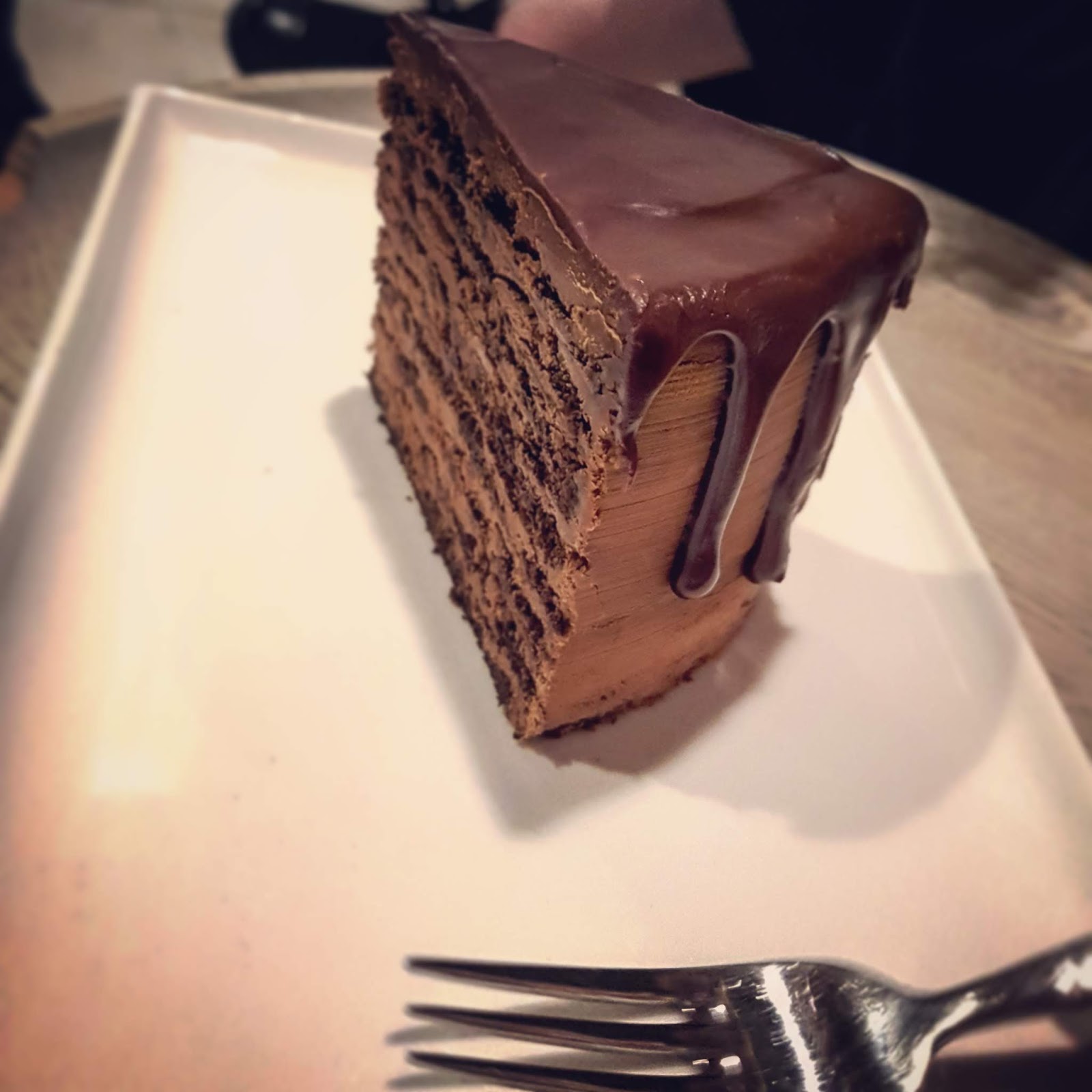
Have I mentioned Fen's chocolate cake before? I have? Oh, right, then...


3pm Rain Room NOTE you need to book this one! Booking link HERE.
     Google Pin here to Rain Room


Rain Room. This is the bit you stay dry in. Actually, you stay dry in the wet bit, too...

4pm Sharjah Museum of Islamic Civilisation
     Google Pin here to da museum


Museum...


5pm The Heart of Sharjah/Al Bait Hotel
     Google Pin to Al Bait Hotel


The cylindrical barjeel at Al Bait is unique in the Emirates...

And there we end the day!

6-7pm Goodbyes/Head to Ajman


Not clever, not funny, not mature...


Tuesday, 3 December 2019

#SharjahSaturday - The Heart of Sharjah


Al Hisn Sharjah

Soooo, here's the scheme. Wandering back from Rain Room and the Sharjah Museum of Islamic Civilisation, we find ourselves walking past Al Hisn Sharjah - Sharjah Fort.

The old fort of Sharjah was recorded as a significant building on the coast of the Trucial States and so it would have been - the Al Qasimi stronghold of Sharjah was part of the alliance - a Federation, really - which tied Sharjah, Ras Al Khaimah and many holdings on the islands and southern Persian coast together under the seafaring Huwala tribe and their rulers, the Al Qasimi.

The fort was almost entirely knocked down by the-then Ruler of Sharjah, Khaled bin Mohammed Al Qasimi, in the late 1960s. The current Ruler, HH Dr Sheikh Sultan bin Mohammed Al Qasimi, rushed home from his studies in Cairo to try and stop Khaled from destroying the fort but was in time to save a single tower, called Al Qubs. Reduced from a major fortification to a effectively a single 'Murabbaa', or defensive tower, Al Qubs gave its name to the square in which it stood - Al Burj, or tower, square. It was colloquially known as 'Bank Street' in the 1990s because all of the buildings around the square, funky early 1980s jobs designed by a Spanish architect (and now much celebrated, although due, at least in part, for demolition) towering over the little burj housed banks.

Why did Khaled want to erase the fort? The reason was to lead to his untimely and tragic death - I'll tell you all about it on the day or you can read about it in (altogether now) Children of the Seven Sands!!!

Dr Sheikh Sultan preserved many of the original materials from the demolished fort, including window frames and other fittings, as well as a detailed plan of the old building. In the late 1990s, he started the huge restoration project, rebuilding the Sharjah Fort in a faithful reconstruction that used traditional materials and followed every line and crenelation of the old fort. And there it stands today, dungeons and family rooms alike, a fine example of an Arabian fort.


A wander down the shaded walkways of the traditional Souk Al Shanasiyah

Of course, you could skip the fort and just dive towards Al Bait - in my humble opinion one of the most beautiful hotel properties in the Emirates. Sharjah's development company Shurooq spent some Dhs 27 million transforming three old merchants' houses and a goodly lump of the 'Heart of Sharjah' traditional old town and souk areas into an achingly funky hotel that screams good taste, oozes tradition and whispers luxury, modernity and chill-out sensuality around every leaf-dappled, quietly murmuring corner. The hotel is managed by Asian uber-chill hotel chain The Chedi and it's not only insanely expensive, but blindingly gorgeous. We're planning to nip in for coffee and perhaps, management permitting, a tour of a hotel that truly stands out as unique and glorious.


The Al Bait Mercedes. Rest of hotel not pictured...

And then we'll maybe take a walk through the Urban Garden as we make our way back to the car park outside Fen Café, where we'll say our farewells or perhaps plan to meet up down the road in Ajman, where evening entertainments abound - Ajman's fast-emerging hotel businesses include a number of beach-side properties along the Corniche, from the very Russian and luxurious Ajman Saray, to the seafront terrace of the Fairmont Ajman or perhaps the English-themed Outside Inn, altogether less salubrious. We're not going to the terminally funky Oberoi Al Zorah, easily Ajman's most luxurious hotel (and an outstanding property in its own right) or the Radisson Blu Ajman with its 100-foot-long sports bar but they're there for anyone adventuous enough to go looking...


The Urban Garden. Its urban. It's a garden.

See you there! Jones The Grocer, 9am, Saturday 7th December. As I've said before, come as you are, stay as long as you like, dip in, dip out, cherry pick - just don't feel you're being 'organised' - we're going to play it all very much by ear! The only thing that is constant is #SharjahSaturday on Twitter, where you can share your Sharjah joy (or pain!) with the world!!!

Thursday, 28 November 2019

#SharjahSaturday - The Sharjah Museum of Islamic Civilisation


The flowering of Islamic science resulted not only in the translation and preservation of the knowledge of the ancients, but in a remarkable flourishing of scientific investigation, discovery and achievement. To this day, a significant amount of our scientific and mathematical vocabulary is peppered with words that have their root in Arabic, a result not only of Baghdad's remarkable Bait Al Hikmah, but of observatories and centres of knowledge in Cairo, Alexandria, Cordoba and elsewhere in the Islamic world.

Mantissa, algebra, zenith, alkaline, alchemy and alcohol all trip off the tongue, but they're all rooted in Arabic. So's the word assassin, before you get too uppity over there in the Arabic corner. Something like 60% of the stars in our modern night sky remain named in Arabic - a remarkable testament to the legacy of Islamic achievements in astronomy. This efflorescence of the sciences in the Islamic 'golden age' provided the base for the subsequent explosion of scientific thought following the dark ages in Europe, but it also underpinned the exploration of our world and the opening up of global trade networks.

As we discover in Children of the Seven Sands (ahem), the Arab traders of this area sailed the seven seas (the number of seas between here and China, as it happens) thanks to the navigational skills and observation of the stars that Islamic scientific discovery underpinned. It was from here that the first intercontinental trade networks were formed. The Emirates' most famous son, Ibn Majid of Julfar, left us a remarkable legacy built on the long-standing Arab navigational capability that sustained trade networks across Asia from before the C8th BCE through to the C15th and led to a virtual monopoly of the eastern trade until the Portuguese embarked on their bloody and cruel conquest of those networks in the early 1500s.

All of this and more are awaiting you at the Sharjah Museum of Islamic Civilisation. The building was originally a souk, but it turned out not to be a terribly successful one. The Museum, I am glad to be able to report, is an altogether more successful venture and provides a brilliantly put together display of the eye-opening ethnography of the Islamic world.

Which is why it's included in #SharjahSaturday, natch...

Wednesday, 27 November 2019

#SharjahSaturday - Rain Room


Rain Room. Funky outside, funky inside.

For the purposes of #SharjahSaturday, Rain Room is a two minute walk from the end of the Irani Souq (passing the Sharjah Museum of Islamic Civilisation, which you can visit if you're too early for Rain Room or leave until afterwards if you are so minded).

I have posted about Rain Room before. It's linked here for your viewing pleasure and convenience. Having said all that, it would be folly to repeat it now.

You can't be bothered to click on the link and are wondering "What IS Rain Room?" It's an art installation or, if you prefer, a piece of experiential art. It was conceived and put together for the Sharjah Art Foundation by an insane international art collective called Random International and its permanent installation in Sharjah is unique in the world.

It's a great big underground space, all black, with an enormous rain shower in it - lit by a single lamp. You walk into the rain, hundreds of square feet of it. You walk slowly. Sensors pick up your movement and switch off the rain around you. You walk in the rain, surrounded by the sound of hissing droplets, and you are dry. Unless, of course, you have Naughty Neece Ava with you - who quickly works out how to move in order to game the sensors and get you wet.


Siiiiinging in the rain, just siiinging in the rain...

It's all a bit mad and quite, quite fun.

You need to book Rain Room online - you can't just rock up and expect to get a slot. The booking link is here. Each session lasts 15 minutes and can accommodate 6 people. I've booked the 3.30 pm slot on the 7th December and have some spares if anyone's interested.

From there we have the option of taking in some Islamic Civilisation or a slow wander back through the souq to perhaps have a leisurely look at Al Hisn Sharjah or enjoy a coffee in the gorgeous, whispering courtyards of the Al Bait Hotel - a place I would contend is probably the finest, most beautiful hotel property in the Emirates - and if not, certainly in the top five.

Tuesday, 26 November 2019

#SharjahSaturday - Fen and the Heart of Sharjah


Fen's chocolate cake. This is actually legal.

Returning from the desert and its amazing wildlife, the idea is to drop into the achingly funky Fen Café, just behind the Iranian Mosque on the creek. Surrounded by art galleries and exhibition spaces (these are often packed with the most puzzling displays of strangenesses that have been created in the name of art, which is a thing that I do not even begin to pretend to comprehend), Fen Café is uniquely Sharjah. It's a collection of bonkers - hipster food served up in painfully 'on trend' furnishings with polished concrete and barasti surfaces all around, neatly packed up in a restored old house - part of the sprawling and visionary restoration of the 'Heart of Sharjah' - a project to restore the old town of Sharjah to its 1958 glories.

In this weather, the courtyard at Fen is a delight - shaded, filled with birdsong and often capped with a sky that can only, in all justice, be called cerulean.


Sitting outside at Fen

So here we take a leisurely lunch break before setting out on a dander through the 'Heart of Sharjah', perhaps stopping off at the Bait Al Naboodah to take a look at the opulent home of Sharjah's most successful pearl trader, with its teak colonnades and breezy summer room. With homes in Paris and Bombay and customers who ranged from jewellers to Maharajahs, Al Naboodah was doing alright, thank you very much, until the pearl market tanked.

By the way, pretty every historian will tell you this happened in 1929. It didn't, it happened much earlier. And they'll all tell you it was down to a double whammy of the Great Depression and the invention of the Mikimoto pearl but that is actually total rubbish. The truth is totally at odds with that lazy narrative and in Children of the Seven Sands I not only debunk the myth, but explain what actually happened, when it happened and why. That wasn't a book plug, honest. I was just saying.


The summer room at the Bait Al Naboodah - the woodwork's all fine Indian teak...

Anyway, we'll pop into the Souk Al Arsah and then pass the gorgeous Al Bait Hotel to take a wander down the shaded walkway of the Souk Al Shanasiyah with its tea rooms and shops selling cool Emirati designer thingies and then through the Irani Souk with its poor stores and groceries before we pootle over to Rain Room. There's no rush, is the idea - we've plenty of time to take it all in and enjoy exploring it all...

Monday, 25 November 2019

#SharjahSaturday - Arabia's Wildlife Centre


I'm wild, baby!

Our second stop on #SharjahSaturday, on the 7th December 2019, will be Arabia's Wildlife Centre. This zoological garden and animal sanctuary is about 30 minutes' drive away from our first stop, Mahatta Fort, but it's worth the journey out and we'll have the chance to point out some other things to do and places to see on the way.

The Wildlife Centre sits on the road to Dhaid, past the Bee'ah waste management complex and the little desert village of Saja'a - once the remote desert home of the fearsome Bani Qitab bedouin but now a bustling industrial area with a cement plant, cable factory and gas field as well as an extensive industrial zone.

It opened in 1999 after an expatriate lady called Marijke Jongbloed wrote to Dr Sheikh Sultan Al Qasimi and expressed her concern about the parlous state of the Dhub or horny-tailed lizard. Long prized by the Bedouin as an aphrodisiac, it was in danger of being hunted to death - the lizard bred in a specific place, a bowl in the Sharjah desert interior. Dr Sultan's response was a bolt out of the blue - yes, by all means protect the lizard, but why not establish a proper wildlife centre and conservancy there, as well? Jongbloed, awed at the chance she'd been given, leaped at the opportunity to built her centre.

Arabia's Wildlife Centre consists of an extensive indoor series of collections of wildlife indigenous to The Emirates - from Ruppel's Foxes to scorpions and saw-tailed vipers. There is also a neat section where larger animals roam around, gawped at by humans in glass cages. As I have said many times before, this last bit amused Jongbloed no end.

There is also the Sharjah Natural History Museum, which looks at the deep history of planetary formation, plate tectonics, dinosaurs and the Emirates' flora and fauna in general. There's also a charming little Islamic Botanical Garden, a kids' petting zoo and, although you can't visit it as such, a breeding centre for endangered wildlife.

After this, we're heading back into town to grab lunch at Funky Fen Café...

Sunday, 24 November 2019

#SharjahSaturday - The Death That Made Mahatta Fort


The Handley Page HP42 - in its time, a technological revolution

One of the reasons that Sharjah's Mahatta Fort is a favourite of mine is it has history - we're talking relatively recent, but nonetheless fascinating history that is little less than kaleidoscopic.

The fort was built by Sultan bin Saqr Al Qasimi in 1932 as part of a deal with the British Government to establish a landing strip and facilities in Sharjah to accommodate the Imperial Airways HP42 biplanes flying the 'Empire Route' from Croydon to Australia.

And it was at the centre of an epic drama that threatened to slash the most valuable link in Britain's Eastern Empire.

Now, I could tell you about the Empire Route and how it hopped across Europe to reach Alexandria and then made its way across the desert to Iraq and then Sharjah, accomplishing the journey in just four days. I could tell you about the trench that was laid across the black Jordanian and Iraqi deserts, using chains dragged behind tenders, to guide the planes. I could tell you of the desert fuel dumps, secured using lock and key against the marauding Bedouin of northern Arabia.

I could talk about the fight between the British and Persian governments that drove the necessity for an airport on the Arabian peninsula in the first place - or the desperate search for a suitable location, fighting against the clock to keep the Empire Route alive. I could sit you down and tell you about that search - about how Dibba was first investigated by a despairing Group Captain, who realised that the ground would take longer to prepare than the British had to hand as they lost their landing rights on Hengam Island. The Persians had insisted on putting their claim to the Tunbs Islands on the table before renegotiating the new agreement. The British had walked away rather than drop the Tunbs, which they saw as belonging to the Trucial States. But it left them with the urgent need to find a new landing strip.

Given a cup of cocoa or two, I'd certainly tell you the story of the HP42, a leviathan of its time, which could take up to 38 passengers (18 in the front, 20 in the back - all 1st class) up into the skies, flying at 100 miles per hour. Of how the dazzling advances in technology made the British flying boats redundant and favoured the long-range HP42. Or indeed of how the Rulers of the Trucial States resisted the British push to establish landing rights - of how Ras Al Khaimah put armed guards out to stop the British establishing a refuelling base and how Dubai refused to allow passengers from the flying boats to land.

I could most certainly tell you the story of Sultan bin Saqr Al Qasimi, dispossessed as a young man and exiled to Dubai before his triumphant return to Rule over Sharjah. Of the fight between his powerful father-in-law and the Ruler of Sharjah, Khalid, who had stolen Sultan's inheritance. And I could tell you about the war that erupted for control of Kalba, ruled by a slave called Barut on behalf of his Al Qasimi overlord. Because the Imperial Airways backup strip was laid in Kalba and in order to do this, the British recognised the tiny east coast township as being a Trucial State in its own right. At one time, Kalba was the seventh emirate.

But I'm not going to. You're going to have to buy the book for that. What I AM going to tell you about is how it took the death of a man to close the negotiations that were taking place against the clock as the British faced the breaking of the air route that connected their Empire to the East.

Hugh Biscoe was the British Political Resident in the Gulf, a life-long administrator in the government of Bombay who had little to no experience of the Arab world and who did not himself speak Arabic. Having gained Sultan bin Saqr's approval to establish a landing ground at Sharjah, a coup given that the British were desperate to find an alternative to Hengam before the clock ran out on their agreement with the Persian government, in May 1932 Biscoe found to his astonishment that Sultan bin Saqr had changed his mind and would no longer permit the airfield to be built.

There was no more time. The Empire Route was in danger of being shut down.


The Empire Route. Imagine, it'd take you about 2 weeks to fly all the way - at 100 mph!

Biscoe called in a flight of Westland Wapitis - at the time fearsome, noisy fighting machines that would undoubtedly have struck the fear of God into the hearts of anyone in Arabia - to reinforce his point. He had no time to spare and couldn't afford to mess around. He pressed anyone he could rally to support his cause, including Sultan bin Saqr's domineering father-in-law, to no avail.

Turning the screw even further, Biscoe now brought the British Navy, the traditional tool of British policy enforcement in the Trucial States, to bear. The pressure on Sultan bin Saqr to sign the deal was intense, but so was the local opposition. Biscoe finally resolved to sail to Sharjah and hammer out his deal with the reluctant ruler. On the way, he picked up the Political Agent to Kuwait, Lieutenant-Colonel Harold Dickson. 

Biscoe had long suspected the British Residency Agent in Sharjah, Isa bin Abdullatif Al Serkal, of machinations against the airport deal. Al Serkal, whose role as British Agent made him one of the most powerful men on the coast, would see his influence wane considerably if the British established a direct presence. Biscoe thought Dickson, a fluent Arabic speaker with enormous experience in Arab affairs, would provide, let us say, a more dependable translation.

In the early hours of the 19th July 1932, the day of his intended arrival in Sharjah, sailing across the Gulf aboard HMS Bideford, Sir Hugh Vincent Biscoe KBE, His Britannic Majesty’s Political Resident in the Arabian Gulf, suffered a heart attack and promptly died.

Dickson barely hesitated. He had Biscoe buried at sea and, no sooner had the body wrapped in its Union Jack slid into the warm waters of the Gulf, but Dickson had cabled London to get permission to finalise the airport deal himself. London was desperate - yes, the more experienced Dickson was to proceed to Sharjah and try to get the deal done as soon as possible. On any terms.

The rest, as they say, is history...

Friday, 22 November 2019

#SharjahSaturday - The Weeks Ahead

Here's your Second Reminder. Next week I'll post more detail about each of our intended locations.

The idea is you can come along and join us at any point and leave at any point. You can come along for the whole ride, or just follow the #SharjahSaturday hashtag on Twitter and pop by when you fancy. Your choice, entirely.

There's a ton more to see and do in and around Sharjah - let alone the emirates' east coast blandishments. But we'll save those for another time, hey?

The Plan 

9am - Jones
Meet at Jones The Grocer, Flag Island. Head to Mahatta Fort.


It was a close run thing at one time - the airport WAS going to be built in Dibba!

10am - Mahatta Fort
Faithfully restored, Sharjah's Mahatta Fort was built by Sultan bin Saqr Al Qasimi in 1932 and leased to the British government as a 'safe house' for overnighting travellers on the British Imperial Airways route from Croydon to Canberra. It houses a collection of the early 'planes flown by 'Gulf Aviation' (Gulf Air to you, mate) as well as a VC10 flight deck you can sit in. For anyone willing to listen, I'll be sharing the 'backstory' to Mahatta - including how it took a good man to die in order to get the agreement to build the fort signed.


Who you lookin' at, punk?

11am - Arabia's Wildlife Centre
Just off the Sharjah/Dhaid highway, you'll find this gem - the Sharjah Natural History Museum, the Islamic Botanical Garden, a petting zoo and Arabia's Wildlife Centre, a zoological park designed so that - in part - the humans are caged and the animals are free outdoors. 


Fen being funky, neeces being cheeky...

1pm
Lunch at Fen Café
So funky it'll make your knee joints ache, Fen is Sharjah's home grown art cafe, a vision in smoothed concrete and chilled out ambience with a good dose of hipster menu and a chocolate cake that sits somewhere above lead on the periodic table.


Al Naboodah was a Sharjah pearl merchant so rich he had houses in Bombay and Paris...

2-3pm
The Heart of Sharjah
We'll take a leisurely wander through the Heart of Sharjah, visiting the Bait Al Naboodah and walking along the Souk Al Shanasiyah to reach Rain Room at around 3-3.30ish. Those folks who actually want to experience the amazing sensation of walking through a rain shower in a dark cavern without actually getting wet will have to book for themselves. Visits are every 15 minutes for groups of no more than 6 and you book online here.


Islamic Civilisation? Check. Museum? Check. Sharjah? Check.

4pm
Sharjah Museum of Islamic Civilisation 
A rather wonderful collection of Islamic innovation, history and artefacts housed in what used to be a not terribly successful souq but which is now a thoroughly successful museum!


Sharjah Fort. When I first got here it had been demolished and only one small tower remained...

5pm
Al Hisn Sharjah/Souq Al Arsah/Coffee at Al Bait Hotel
Sharjah Fort was totally and faithfully rebuilt by the current Ruler of Sharjah after its almost total destruction in the late 1960s and has some interesting displays in it, apart from its interest as a big, traditional forty thing. The Souq Al Arsah - a faithful reconstruction of the traditional souk - backs onto the uber-luxurious, Chedi-run Al Bait Hotel, a Dhs 27 million conversion of three traditional old merchants' houses in the centre of Sharjah.

7pm
Wave goodbyes/head for Ajman


Wednesday, 20 November 2019

Something for the Weekend? The Green Planet


Neece holding cockroach at Green Planet. This is the expensive way to do it. 
For the same experience at zero cost, pop the nearest drain head and scoop your hand in. 
No, no, please it's nothing. You're welcome...

Okay, let me be quite clear about this - this one's pricey, but it's worth it. To be fair, we're a bit spoiled on the general cost of a thing to do with the kids front - look at parks and attractions in the UK and you're straight into second mortgage territory right there. So if this sets you back Dhs 840 for a family of four, that's sort of fine, right?

The Green Planet by Meraas (they're a property developer or, if you prefer, lifestyle-shaping dream enabler) is a largish  but otherwise relatively unprepossessing building to the north of Satwa, near enough to the Coka Cola Arena. Inside is a tropical rainforest. And it's pretty cool as indoor rainforests go.

Now, before you get all sniffy about fake rainforests, let me just remind you that one of the most amazing tourist attractions in Cornwall, UK, is the Eden Project, a series of biomes contained in double-skinned, climate-controlled domes. And, like the Eden Project, Green Planet is a great platform for teaching kids about the world and some of its most brilliant nature.


There are 3,000 species of thing in Green Planet, from cockroaches you can handle (or, in my case, not handle the sight of, let alone touch) to sloths you can sloth at. There's a bat cave and a bit of outback and loads of little tactile experiences and things to do, see, handle, touch and generally gawp at. The whole journey starts at the top of the rainforest canopy (Green Planet is built around a massive 'tree') and then wends its way down past waterfalls and tree houses, rope bridges and walkways. There are monkeys and parrots, dazzling birds and slithery snakes, fish (including - cue dramatic sounds - piranhas) and insects everywhere.


We went with the neeces and a magnificent, royally entertaining time was had by all. Ellen wants to be a vet, so she was holding snakes and letting cockroaches run over her hand and doing all manner of other animally stuff that normal people would flip out over and that kids can, well, do.

If you want to make a real day out of it, maybe do lunch somewhere in City Walk and then nip over to the Dubai Frame for an afternoon treat...


Tuesday, 19 November 2019

Ten Wildlife Reserves to Visit in the Emirates


Wildlife. Rawr.

Many, many years ago I interviewed a lady called Marijke Joengbloed. She was the archetypal Expat Expert - a woman who had landed in Al Ain sometime in the dusty, distant past and who had turned her curiosity about the Emirates' natural history into becoming something of a centre of expertise. Like many before her, because Marijke cared about this stuff - and nobody else did - she became the de facto expert on the UAE's flora and fauna - as others became experts on the history, archaeology and ethnography of the place. The only people who seemed to care were the amateurs - the 'experts' had no expertise to offer. They'd never even been here.

Of course, the Bedouin knew every track in the sand, every shrub and tree, but nobody was asking them and now it's too late (I'm currently reading Aida Kanafani's 'Aesthetics and Ritual in the United Arab Emirates' from 1979, which you'll be hard pressed to find a copy of anywhere - it's a fascinating snapshot of life before, well, now).

The Emirates was, literally, uncharted territory - even when I arrived here, blinking, in the late 1980s.

Marijke was a big lady in every way and when I interviewed her back in the '90s, she was cradling a little pink baby hedgehog in her arm, nursing it with a pipette of milk. I discovered that there are actually three species of hedgehog in the Emirates - I had been amazed to find there was even one. I posted about it - and her role in the establishment of Arabia's Wildlife Centre in Sharjah - over here.

These days, we not only have a wealth of knowledge about the biodiversity and wildlife of the Emirates, we have active conservation projects in place. Some of these are eminently visitable and many make for great weekend explorations.

Of them all, the centre that Marijke established remains the most brilliant and diverse place to visit, with an Islamic Garden, Natural History Museum, a petting zoo for the kids and the centre itself. It's so good, we're going there on #SharjahSaturday...

Marmoom and Al Qudra Lakes are a great winter visit, with walks around the man-made lakes rewarded with all sorts of wildlife - including a huge amount of birds. There are a range of recreational facilities around here (with funky eats provided by the traileropolis of Last Exit) and, of course, the desert luxury of the Bab Al Shams hotel is just around the corner. Although there's no visitor centre at the Ras Al Khor Nature Reserve, there's a viewing point where you can look out for the plentiful flamingoes and other birds - but if you want a bird-spotter's paradise, head north of Sharjah to the award-winning and thoroughly delightful Wasit Wetland Centre, where you can whistle at Fulvous Whistling Ducks among others.

Heading inland, you can make for the desert village of Nazwa and the Al Ghaf Conservation Reserve, intended to preserve important desert populations of the UAE's national tree, the Ghaf (or prosopis cineraria to you, mate). Again, no visitor centres here (although some lovely drives) but close by you'll find Badayer, the homeplace of the Dune Formerly Known As Big Red and home to numerous dune buggy rental joints as well as the brand new (and achingly cool) Badayer Oasis, a 21-room hotel with 10 tents built on a desert theme, developed by Sharjah's Shurooq. If achingly funky desert hotels is your thing, I'd heartily recommend taking a look at Al Maha, which is at the centre of the extensive Dubai Desert Conservation Reserve, itself home to herds of gazelles and Arabian oryx. I have to note, we haven't been back since it was managed by Emirates - it's now a Marriott, but the property itself is utterly gorgeous, with each tented 'chalet' equipped with its own infinity pool overlooking the desert. Quite, quite magical.

Exploring the mountains, you can spend some time walking around (or driving around) the fertile wadis of Wadi Helo, a protected nature reserve you'll likely pass through on your way to visiting the Al Hefaiyah Mountain Conservation Centre. Here you'll find over 30 species of Arabian wildlife, including that tartiest of all big cats, the endangered (in the UAE likely extinct in the wild) Arabian Leopard. Just over the road from Al Hefaiyah, you'll find the Kalba Birds of Prey Centre which features a fierce collection of avian predators who'd all rip your eyes out as soon as look at you. They do stuff like flying demonstrations here. While you're in Kalba, you might like to stay at Shurooq's glamping retreat near to the Kalba Nature Reserve. If you do and you fancy something to get up to next day, you'd do worse than visit the UNESCO listed biosphere reserve at Wadi Wurayah, inland of Bidya in Fujairah - although I have to confess last time I went it wasn't open to the public, the Radisson Blu website suggests very strongly that is no longer the case. Just in case it is, and to be sure to be sure of my ten reserves, you can go south and take a hike around the Al Wathba Wetland Reserve in Abu Dhabi.

There are actually loads of wildlife reserves and parks dotted around the UAE and they all provide a pleasant wander in these cool winter months...

From The Dungeons

Book Marketing And McNabb's Theory Of Multitouch

(Photo credit: Wikipedia ) I clearly want to tell the world about A Decent Bomber . This is perfectly natural, it's my latest...