Thursday, 12 May 2016

Thirty

Martin, R.M. ; Tallis J. & F. Arabia. 1851 Wor...
(Photo credit: Wikipedia)
It was thirty years ago when I first travelled to the Arabian Gulf (Wikipedia says Persian Gulf, but then Wikipedia has a distressing tendency to say tomayto, faucet and German Shepherd Dog) - on business, as it happens. Few, back in the day, were intrepid enough to travel to the peninsula for touristic purposes and most of those were Germans seeking exciting new ways to get skin cancer.

It was thirty years ago I was head-hunted by a strange, balding suspected megalomaniac and pitched into a world I could never have imagined; a world of madness and oddity beyond belief. If the end of days was to be filled with cats barking and men walking backwards, I was severely underwhelmed, because Saudi Arabia in 1986 was a great deal weirder than all that Dantesque nine circles of hell stuff. You want dystopia? Welcome to the Gulf, my friend. We have too much dystopia. How much you like pay?

I was to sell things. To this end, a strange attempt was made to put me through a thing they called 'Sales Training'. Basically, you pretended to be interested in people, asked them lots of questions to find out what they wanted and assured them your product was just what they needed. They agreed, signed the form and you ran away with all of their money, a small percentage of which you were allowed to keep.

What could possibly go wrong?

Pal and colleague Adel thinks I should document my life in the Gulf. This sort of advice is usually to be avoided, because friends and family always think you sound more interesting than you really are. But it was he convinced me to go Prado over Infinity and he was so very right about that. Let's face it: if you want advice on car buying, Emiratis are unfailingly sound. But memoir? Really? The diary of an expat nobody? Who in their right mind cares?

And then it hit me on the drive home yesterday. It's been thirty years. 30. The big three zero. I've turned into some of those crusty old bastards I met when I first arrived. They were legends those people. They had seen strange things, could tell strange tales. And I cast my mind back to those first experiences in the sand pit and I must confess, I amused myself greatly.

This is always a dangerous sign. It means I'm about to write something everyone else thinks is shit.

So here's the deal. I'm going to have a go at dredging it all up and posting it. God knows, the blog has been missing posts badly enough recently. I might get bored and just give up - and I start the exercise with that caveat. I might carry through with it and turn it into a book, although Middle East Memoir is arguably the genre which gave 'vanity publishing' its bad name to begin with. But then I've made something of a speciality of publishing books that don't make much sense. Why stop now?

In the spirit of the wonderful Dubai As It Used To Be and even Facebook's Dubai - The Good Old Days, I'll have a go at remembering the anarchy and madness that made me fall in love with the Gulf, and the wider Arab World. For this is the place I still call home today and for which, 30 years on, I retain a genuine and abiding love...

Thursday, 5 May 2016

shjSEEN - Sharing Sharjah Things, Stuff And Stories

English: Sharjah, United Arab Emirates (UAE).
(Photo credit: Wikipedia)
I'm contributing blog posts to an interesting project called shjSEEN, which is being run by the Sharjah Chamber of Commerce and Industry.

The idea is to take a fresh look at Sharjah and perhaps delve into the many hidden joys, delights and treasures of The Cultured Emirate, under the tagline 'One city, lots of soul'.

I can hear you Dubai types scoffing as I type, so you can stop that right now, pally. Sharjah's got a great deal going for it - all you have to do is look beyond your brunches, blingy bars and chain stores. And you can get over that wailing about the traffic, while you're at it. At the weekends, when Sharjah's arguably at its best, it's generally a breeze.

Sharjah HAS got soul, lots of it. From the area where I live (whose tribal leader, in the 1920s, invaded Ajman and occupied its fort), down to Al Khan on the Dubai border (where a protracted gun-fight took place between Dubai and a gang of dissidents, which stopped each day to let the charabanc of British travellers on Imperial Airways pass), Sharjah's got history. Loads of it. There are Umm Al Nar tombs, iron age settlements and ancient cities, forts and trade routes that go back - literally - to the dawn of humanity. There's the history of trade, from the lovingly restored (and beautiful) Souq Al Arsah and Heart of Sharjah through to Mahatta, the fort which was built as the Gulf's first airport hotel.

There are sights to see, from Mleiha's world-class visitor centre to the many museums, art galleries and exhibitions. There's loads to do, from dune bashing over fossil rock, chilling out in Khor Fakkan (Sharjah's the only Emirate with coastline on both the Arabian Gulf and Indian Ocean) through to wandering around the Sharjah Desert Park with its Natural History Museum, Wildlife Centre and Botanical Gardens.

In Sharjah you can buy diamonds, pearls, oud and bukhour, ambergris, musk and antiques, from old stamps and coins from the UAE and wider Middle East through to khanjars and water jars: you can wander perfume souks, spice souks, old souks, new souks and even gold and blue souks. You can take the kids to the aquarium or to play as you enjoy a waterside coffee at Al Qasba, or Al Majaz. Or let them go wild in the rides, swings and waterpark at Montaza.

If you fancy a full-on Friday brunch without having to fight off hooning, red-faced drunks in Paul Smith shirts and Coast dresses, the Radisson Blu does a family one including pool and beach access, so you can snooze it off - and cooks up some of the best Lebanese food you'll find outside Beirut. The Sheraton Sharjah does a glorious afternoon tea for pennies.

So I'll be looking forward to writing about these things and more - because there is, yes, a lot more. It's all rather fun, I must say!


Sunday, 24 April 2016

Still In Limbo. Enjoying Limbo. And Ginger Beer.

English: Bottle used for J. Ladd's ginger beer...
(Photo credit: Wikipedia)
I realised things were getting pretty desperate when I started growing a ginger beer plant. I used to have one of these as a kid, gifted to me by someone who hated me.

I used to sell the resulting ginger beer at school. It was mildly alcoholic and popular. Things got out of hand when the school market became saturated and I had to run for it before the teachers found out why their classes were suddenly filled with a mild ethanol and ginger miasma and their lessons greeted with enthusiasm that quickly slipped into grinning torpor.

Ginger beer plants are a curse. You grow one, it makes ginger beer and you end up with two. So you make twice as much ginger beer. It's a mad experiment in exponential escalation a la the wheat and chessboard problem. A couple of weeks later your house is filled with bubbling carboys and near-exploding bottles, cloudy brews and the undeniably rich yeasty reek of fermentation. Your garage is a cellar and your garden has become a storage zone. So you start to give away ginger beer plants. To people you hate.

Trying to grow a ginger beer plant in Sharjah is probably a) illegal and certainly b) pointless. I wouldn't even have contemplated it except I have acquired some small ceramic-stoppered bottles and feel guilty about throwing such pretty little things away. Oh, and because I hadn't got a writing project on the go, I was suffering from serious terminal purposelessness.

Now I have two such projects. They're jostling for my attention. One is a recounting of Gerald Lynch's early history in Civil War Beirut. The other I can't even talk to you about. Seriously.

The ginger beer plant's been chucked out. I wasn't really serious about making ginger beer.

Honestly, ossifer.

Sunday, 10 April 2016

Any Old Post

Obscure Motmot
(Photo credit: Wikipedia)
I've slipped into the warm waters of a happy limbo since the LitFest. I've had little enough to say, too 'meh' about things online even to tweet very much but otherwise perfectly content in my space. Easter saw the Niece From Heaven and Naughty Niece coming out for a week which was lovely. Other than that, no news.

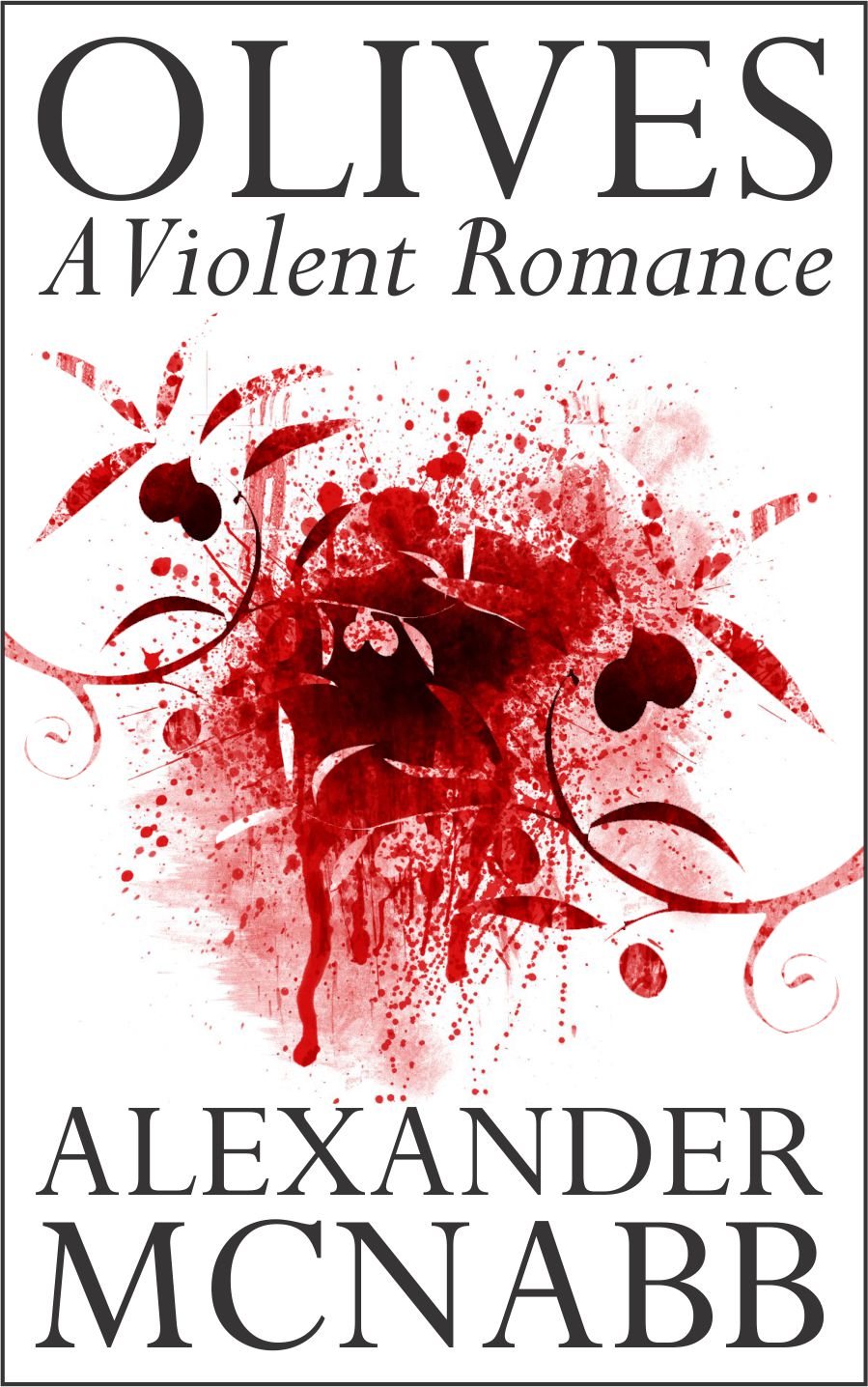
I've been tinkering with Beirut - An Explosive Thriller being a free book on Amazon. Having hit #1 free thriller, the book slowly slid down the slope back into the gloopy, fetid air of obscurity that is the lower reaches of the Amazon charts. Olives never did so well, a combination of less than dramatic title and over-dramatic cover doubtless making it less attractive to an incurious wandering eyeball somewhere in Missouri.

Over 2,500 free downloads of Beirut later, only one new review has been posted of the book on Amazon. I wonder quite how many of those downloads ever got opened? Incidentally, you need over 1,000 downloads a day to top the free Thriller chart and a good 200+ a day to stay up there in the top 3 - about 50 downloads keeps you in the top 10. The downloads peaked high early, dropped back very fast and the book is currently being downloaded about 20 times a day. Whether that is residual recommendations from the original spate of downloads or just chance discoveries being made, I do not know.

As for new projects, I've been flirting with the idea of telling the story of how Gerald Lynch first popped up in Beirut during the early 1980s, chasing an IRA bomb-maker called O'Brien. That early history is hinted at in both Beirut and Shemlan. The idea would be a novella rather than a full-on novel. There are other ideas bouncing around, too. Frankly, I'm in no rush and am just letting things bounce around and bed down in their own time.

I am finding that letting my 'online life' settle down into neglect is not resulting in the end of the world as we know it. Who knew?

Sunday, 20 March 2016

'Olives - A Violent Romance' And Flirting With FREE


I've been playing around a bit with this here FREE thing and so Olives - A Violent Romance is now available across ALL ebook platforms as a free ebook. That's right - you can now download my first, acclaimed thriller novel for nothing. Nada. Sifr. It's all yours. Fill them boots.

While this is nice and easy to do with Smashwords (which populates iBooks, Kobo, Barnes & Noble and so on), Amazon doesn't support free books unless you've enrolled in KDP Select, which limits you to selling only on Amazon. So - this is a million dollar question for authors - how do I make my books free on Amazon for Kindle without enrolling them in KDP Select?

Here goes:

First you pop over to Amazon and set your royalty rate to 35%. This is important, because at the 70% royalty, you undertake to Amazon that you won't sell elsewhere at a different price. So when you start messing about with prices on other platforms, Amazon can (and has every right to) get a bit tetchy. At the 35% royalty, there are no such restrictions.

Now you set the price to zero in Smashwords and wait for that change to impact iBooks and the other stores served by the multi-publishing marvel. Amazon picks this change up and at its discretion will match its own price to that of iBooks, Kobo and Barnes & Noble. If Amazon's price crawlers don't pick it up after a few days, there's a little button against the book's page on Amazon that allows you to request a price match by providing a link to the competitive store where the other pricing (ie: free) is offered. Note it doesn't work if you provide a link to Smashwords. It has to be a retailer.

My first, silly, book Space is, and always has been, enrolled in KDP Select simply because I wanted to play around with the platform. KDP Select allows you up to five days' free promotion every three months but does have that terrible drawback of only letting you sell via Amazon. And only five days' free promotion isn't quite enough to really make an impact, in my humble opinion. Olives is now perma-free so I can provide a sampler to an increasingly skittish and wary book buying public. And if they like that, they can buy Beirut - An Explosive Thriller for $0.99 and Shemlan - A Deadly Tragedy for just $1.99!

Does 'free' work? Well, in the first 24 hours, I've shifted over 500 books. Will it win me readers, reviews, accolades and plaudits? We'll see. I'll let you know how it goes if you sign up for my occasional freebie, hints and stuff emailer... See what I did there?

Oh, by the way, A Decent Bomber and Birdkill will still cost you a reasonable $2.99. You ain't getting them for free...

PS: Amazon also picked up a momentary blip on Beirut's pricing as I was playing around and made THAT free too in the US, although not the UK. For some reason, downloads of Beirut have massively eclipsed Olives and it's now #2 in the Thrillers & Suspense, Espionage listing of the Kindle store. Which is nice...


Sunday, 13 March 2016

That Was The LitFest That Was


I'm feeling slightly shell-shocked this morning. The weekend's whirl is over and I realised, probably massively belatedly but then I am a bear of remarkably little brain, from the moment I started the process of editing and formatting Birdkill, I was preparing for it.

I got roped into a panel on science fiction at the last minute, which was a little bit strange. One of the panellists decided we were all going to start with a reading which I thought odd, but I was feeling benign and generally happy go lucky and so went along with the scheme. There should be a law banning people who assert they 'read rather well' from ever reading their books to an audience.

The invitation to a science fiction panel came because of the mad eugenics, drugs and battlefield enhancement program that's at the heart of Birdkill. I thought of explaining that it's actually reflective of some real-life, modern-day programs run by people like DARPA but threw that up and just agreed to it. In all things bookish, I have a policy of never, ever saying 'no' to anything - something I have rarely had cause to regret, BTW.

It all went well enough, I suppose and we chatted happily about how Sci-Fi has sort of grown up and is no longer the guilty secret read it was when I was a kid, how writing 'near future' Sci-Fi is harder than space opera and other stuff. I was there more as a fan than anything, I suppose. I managed to get in a dig about how explorer of suburban dystopias JG Ballard would have loved writing a novel set in Arabian Ranches, which was all rather fun.

I went to Justin Marozzi's talk about Baghdad which was great. One of the perks of being a LitFest author is your wee badge gives you 'access all areas' and you can attend sessions without a ticket - something I always manage to make all too little use of. I had read Marozzi's history of Baghdad with fascination and similarly enjoyed his presentation. Of course he had to tell the Haroun Al Rashid story. Tsk Tsk.

The how to find your route to publication and onto shelves panel was an absolute hoot. Having in previous years found myself debating the role of traditional publishing vs self publishing with people like Luigi Bonomi (the world's nicest literary agent) and Orion's Kate Mills (an eminently sensible and most likeable lady), it was nice to finally encounter someone who represented the face of traditional publishing I felt I could really disagree with. Jonathan Lloyd is chairman of Curtis Brown, a very big London literary agency, and he was eventually provoked into aiming a sentence at me starting with 'With all due respect' - a phrase all English people know means 'I am about to be rude to you' and Jonathan didn't fail us, advising me that perhaps I might better spend my time learning how to write well instead of dancing around wasting it playing at book marketing.

I am very glad, in hindsight, that I noted the English preamble to discourtesy rather than trying to address the assumption behind it. I'd have come across as an angry and defensive person and I most certainly am neither of those (at least when it comes to writing and publishing my books!). I'm perfectly happy that traditional publishing should continue to strive to exist, as I am that they have clearly decided the things that interest me and how I tell my stories are not for them. Given that, the swipe rather back-fired. Mind, I don't think I'll be signed up by Curtis Brown any time soon...

Arrow's Selina Walker took perhaps a more benign view of the changing face of publishing and the opening up of the market to wider choice and it was clear that publishers and agents are no longer quite as aligned as they once were. Jonathan's assertion that agents were on the side of the author while publishers were in it for themselves drew a polite, measured but I felt slightly pained response.

This was the stuff though - I would describe the panel as lively and it must have been highly entertaining for the audience, which is what you're after really, isn't it?

But I had the most fun the next day, with the panel on crime I shared with Chris Carter and Sebastian Fitzek, both of whom write about serial killers, psychopaths and really, really bad people. I noted to the audience that I felt like something of a fraud - my bad guys are just bad, but they're pussies compared to Chris and Sebastian's bad guys. My bad guys steal ice creams from small kids, stuff like that. They won't rape you while they're sucking out your brains with a straw. Truth be told, my good guys are more of a worry...

We talked about research - meeting IRA members, serial killers and forensic surgeons; about inhabiting the grey area between good and evil; about creating empathy for horrible characters and how you handle putting yourself in the head of a killer. I did a lot of book plugging, for which I am truly contrite.

Both Chris and Sebastian are very nice guys who have some worrying stuff going on in their heads, but they're engaging and genial talkers who conjured a great deal of laughter from the audience. We wrapped up on the hour and it was clear both authors and audience would gladly have stayed another hour and more bouncing all these questions, ideas and experiences around.

We signed books afterwards and some people turned up to have me sign my books which is lucky because that doesn't usually happen and I was dreading getting sandwiched between two international best-sellers with my usual queue of three (mind you, they put me next to 'House of Cards' author Michael Dobbs the day before. As usual, a line disappearing into the horizon next to the yawning space left in front of me after I'd signed a few books. Le sigh.)

As usual, the LitFest team were glorious, wonderful, patient and kind. If there was a single hitch or hiccup, I certainly didn't spot it. Tens of thousands of people, 160 authors, hundreds of sessions, events, happenings, talks and signings. And it was all as seamless as a seamless thing.

So here we are. Facing a world without the Emirates Airline Festival of Literature - at least for another year. What AM I going to do?

Not write another book for a while, I can tell you...

Wednesday, 9 March 2016

Twitter Ads, Book Sales And Promoting Birdkill


You know I've got a new book out, right?

Right.

I've been playing about a bit with analytics and Twitter ad campaigns. I'm a big fan of Twitter and thought it would be interesting to see what I could get up to in terms of promotions and generally try a couple of things out. I've run Google adwords campaigns in the past and was particularly interested to see how Twitter stacked up against Goog.

Twitter offers a pretty powerful set of dashboards allowing you to analyse your tweets, as well as run promotions to audiences you select. There are a number of ways of slicing and dicing this, by behaviours, interests or contextually based on actions. You can also target other people's followers, which is a bit 'Google' - at the same time mighty handy and also a little creepy.

Generally, book promotion tweets invite lower engagement rates unless they mark real milestones or events or contain some element of wit, news or opinion. Nobody would be surprised to know that 'buy my book' doesn't really cut it.

Timing is also... everything. First thing in the morning, elevenses and evening tweets tend to do better. And so do book tweets that follow a wider non-book tweet, typically an interesting content share.

I ran a campaign over the past weekend which targeted a range of key words, principally 'read' and 'book'. I limited it to the UAE, US and UK and ran it over two days with a total budget of $100. The campaign was based around two tweets and two 'cards', which are a graphical element with a link displayed. Here are those very cards:


Each card graphic is 800 x 320 pixels. So each ad gives you a call to action opportunity with a tweet, a graphic and a clickable link. It's quite a neat wee package. The above turned into the below when I'd finished with 'em:

 The above got $79.29 of my spend, generating 25,970 impressions and 126 clicks.


This one got just $20.71 of my spend, but generated 13,690 impressions and 35 clicks.

Both ads performed similarly, costing around $0.60 per click. So in total my two-day campaign generated 39,660 impressions and 163 clicks to my Amazon page.

What happened? I hear you asking. How many books did you sell over this period?

One.

And I can't even be sure that one came from Twitter, because Amazon doesn't offer the same sort of analytics to authors. It shouldn't really come as a surprise, it's pretty consistent with McNabb's Law of Clicks actually.

I'm running a second campaign now, which targets a number of local UAE handles connected to reading, literature and culture with a much wider selection of creatives. That's costing more per click but getting more clicks per impression. Generally, I found Twitter easier to get my head around and more diverse than Google, but to be honest I'm not really a dashboard kind of boy...

And I'm clearly just playing around here, but there's room to explore a great deal more, leveraging different routes to find, attract and convert readers. That all costs money, of course, and at $100 for one book sale, I can see the route to bankruptcy is not only paved with gold, but also quite comprehensively greased.

Are the messages wrong? The creatives goofy? The targeting atrocious? These are all subjective and yet the dashboards available mean you can refine these, testing what is working and what isn't, increasing your success rate with each iteration. What fascinates me is how 163 people clicked on a link to Amazon and didn't click on 'Buy now'.

Anyway, it's been interesting and I'll continue to play around with it all. I hope the above is useful to someone, somewhere. And if you have any comments, views or insights, you know where to find me: @alexandermcnabb...

Monday, 7 March 2016

Schools. You Gotta Love Them...


Pristine Private School is one of a number of schools clustered in the middle of tower blocks and residential buildings in Dubai's northern Al Twar area. Yes. I checked. No dust.

I was there as an author from the Emirates Airline Festival of Literature, to talk to the 'seniors' about narrative and stuff. The hall was very high but not huge in of itself. The stage was huger and the first thing I made up my mind about was not to use it, but to stay at ground level. The kids filed in: girls to the right, boys to the left. Like a dolt, I hadn't told the faculty I needed an LCD and laptop (my own laptop only does HDMI output) to plug my PPT into. They procured both in seconds flat, smilingly.

Me, I'd have killed me, but you takes yer luck as yer finds it.

So we're talking about 100 students in all, something like that. I told 'em about narrative and its history, why it's so important to learn to tell stories for all sorts of reasons: commercial applications of narrative, social applications. Political applications. How you can define and build change around narrative and counter-narrative. How narrative is used to define people, religions, races. How people telling your story when you're not telling it is not a good thing. Basically, to forget what your mum and dad told you and become good at telling stories: the taller the tales you tell, the better.

I told 'em about how publishing was being screwed by the Internet and associated technologies and about disintermediation and what it means. How the democratisation of knowledge that Gutenberg's press imposed on Europe was being repeated by the web and ebooks. And then I talked about my own journey into publishing and my books. I told 'em about the madness of restrictions on taking 100ml of liquid on aircraft when the IRA's last great bomb weighed 1.5 metric tonnes and blew out the heart of Manchester. And, of course, about women going insane while their friends race to try and find out the root of that existentially threatening turmoil. As you do...


Narrative. This sort of thing. 17,000 years in a few slides...

The questions tumbled in. Writer's block. How do you shape narratives? Does a book really always have to start with someone in 'normal' life who's then disrupted by a triggering event? Isn't that something of a trope? How do you take an idea for the beginning, middle and end of a book and connect that up into a whole story?

I was given a bouquet of flowers and a fancy wee trophy as a thank you. They didn't have to do that, really. I signed books. I lost count of how many. Can you spell your name please? Sorry was that Humaid or Hamed? Shayma or Shaima? Ayesha or Aisha? The girls all wanted Olives and I sold out. Which was a bummer because my next stop was Dubai's English College and I didn't have any copies for the students that wanted it. I ran late and had to dash across the city to make it to English College on time.

Gathered in the library of English College was a smaller group. Same talk, essentially. A few variations. A wee bit looser with the old demotic Anglo Saxon. Fewer questions at the end, a quiet room. And then they all clustered around to buy books and the questions came one on one that they hadn't felt they could ask in a group. Signing away, chatting about which book I preferred, how I had thought this or that up. How do you connect stories together? How do you actually, you know, publish a book? How do you upload files to Amazon? Why did I feel a connection to the Middle East? Had I ever lived in Beirut? What's a good book cover vs a bad one? Where can I get Olives? Guilt trip, that last one. I shouldn't have let them all go to the last school...

Bright as a button, both groups. A genuine interest in telling stories, in narrative and a love of books and writing. You could see some of them really having revelatory moments, while a few were there on sufferance. Most were chatty, engaging and cheeky with a lot of sparkiness and wit on display.

What a way to spend the day. I could do this for weeks on end, honestly. What they made of the sessions I can only guess. Some old shouty man berated us for an hour and made us buy his books and I didn't even want him scrawling on the title page and miss-spelling my name.

The author's dinner is next. We always has fun at this. Not always for the right reasons, you understand...

Saturday, 5 March 2016

What? MOAR LitFest Panels?

Five Science Fiction Novels
 (Photo credit: Wikipedia)
I'm doing a third panel at the Emirates Airline Festival of Literature, "Future Shock: Writing from a Sci-Fi World" after LitFest luminary Aedan caught a blog post about Birdkill and realised it had weird sciency eugenics stuff in it.

The panel blurb goes thusly:

Humanity has found itself living in the future, and it could be argued that so far we have singularly failed to rise to the challenge. We ask our panel of three very different authors, who generally write in other genres but have recently written one or more science fiction novels – will we survive the world we are creating?

You could argue, funnily enough, that silly first novel Space was science fiction (I'd have called it a high tech thriller spoof, but what I call my books has nothing to do with what people get up to. Just ask that there 'trilogy' of Middle Eastern spy thrillers), so I've got previous 'form', but Birdkill's spooky Hamilton Institute certainly would appear to be the stuff of futurism, although as we now know it's not really far fetched at all.

I've been doing a lot of work in the day job related to futurism and have always sort of paddled in the march of technology area, right from back when I used to write for, edit and publish computer and telecoms magazines and books. So this might be quite fun. I'm joining Dr Who novelist Jenny Colgan as well as space opera author Garth Nix to kick around the proposition that humanity may not survive its own inventions.

The panel's from 10-11am on Friday 11th March at the Al Baraha 1 room at the Intercon Festival City. It's linked here for your convenient LitFest ticket buying pleasure.

And don't forget, you can also come along to:

And Now the Hard Part: Getting Your Book into Print and onto Shelves 
Friday 11 March, 3.30pm-4.30pm Al Ras 2, InterContinental 
Where me and another writer type join two publishing types to talk about getting picked up, marketed and generally turned into a best selling international smash hit sensation. 

Crime Across Continents: How to catch a killer
Saturday 12 March, 11.30am-12.30pm Al Ras 1, InterContinental
Where I join worryingly capable inventors of nasty serial killers Chris Carter and Sebastian Fitzek to talk about how you make your bad guys really, really bad.

Friday, 4 March 2016

Birdkill: Why I Couldn't Quite Get Out Of The Middle East

English: My own work. The wine making headquar...
(Photo credit: Wikipedia)
'You write very well, you know. You just need to get out of the Middle East. It's doing you no favours. We really, really don't care about it.'

So did a prominent London literary agent advise me. The words hit home hard: I had thought being the only person writing spy thrillers set in this most colourful and conflicted area since Eric Ambler gave us The Levanter would be a good thing, but apparently not. The 'we' he referred to was the Great British Public - the people UK publishers want to sell books to.

I didn't have a firm 'next project' lined up after Shemlan - A Deadly Tragedy and I had been toying with the idea of making a book out of my 'Uncle Pat' joke. And so was born A Decent Bomber. I set about abandoning the Middle East with as much distress and compunction as the average psychopath has for his victim. How was I to know that, in terms of attracting British publishing, the next worst place on earth to set a book after the Middle East was Northern Ireland?

By Birdkill I'd given up trying to please anyone but myself, and yet the book was to be set in the UK. It is explicitly not located anywhere in particular. I started out with my short story as a basis and began to construct a narrative around it. That narrative exploded, pages filling with great rapidity as the dreams that had formed the beginning and end of the book raced to meet each other.

Soon enough, Mariam Shadid came calling and simply refused to leave. Great, so now I've got a Lebanese journalist with frizzy hair and a taste for combat trousers and a click-hungry Middle Eastern scandal/gossip website. The Edgware Road poked its damn oud, shisha and cardamom coffee-scented nose in. The pull continued: Robyn's past was drawn inexorably to Zahlé with its restaurants alongside the rushing little torrent of the Berdawni River and its tiled rooftops scattered across the rolling Beqaa. And then, if that wasn't all bad enough, the Château Ksara came calling with its beguiling wiles and wines.

Mary was chatting with Félicie at reception when the Englishman stalked in, an overgrown beanpole of a man, grey-haired with an aristocratic English nose and points of piercing blue under bushy brows. He looked dry and papery, but powerful. The Lebanese have a nose for power, she surmised. Some are attracted to it, seek it; moths to a candle. Others flee it, fearing the trouble and disruption it brings to our precarious lives. She sighed.
‘I would like to speak with Monsieur Delormes as a matter of urgency, please.’ He announced to Félicie who was, and this was her way if you but knew her, unimpressed. She flicked her hair back and glanced over at Mary with a hint of a roll to her eyes.
‘Would you? Who will I say is calling?’
‘Lawrence Hamilton. It is in regard to his new patient.’
Mary tried not to betray her interest. ‘I can take him there.’ She tried to mask her quickening with a shrug. ‘If you like.’

And quite where Sister Mary, the fag-smoking Lebanese nun, came from I could not even begin to tell you, even if you put the thumb screws on.

There's not much Lebanon in there, to be honest, but there's a scattering. Enough to let you know that the Middle East ain't giving me up that easily. Which, oddly enough, I find something of a comfort...

From The Dungeons

Book Marketing And McNabb's Theory Of Multitouch

(Photo credit: Wikipedia ) I clearly want to tell the world about A Decent Bomber . This is perfectly natural, it's my latest...