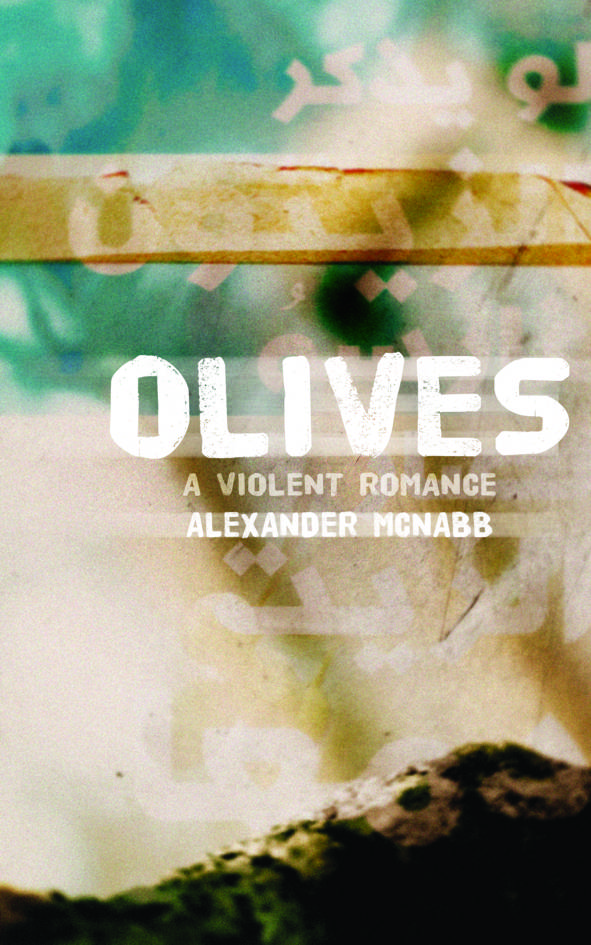
Monday, 6 February 2012

Publish vs Self-Publish - A Voice of Reason?


I posted on Patty Jansen's blog last week and she's posting on mine this week. I do hope she doesn't make as much mess in my place as I made over at hers. I met science fiction author Patty on Harper Collins' peer-review website for aspiring authors, authonomy. Here's her take on the whole business of getting published and where the self-publishing 'revolution' is taking us. We don't necessarily see eye to eye on this, but in diversity lies life...

On Friday, Alexander wrote a guest post for my blog entitled Rejection – An Author’s Guide detailing how his books had gained him 250 rejections, and how, despite being given hope, he had ultimately failed to find a publisher.

My first reaction was: Wow, 250 rejections. My second reaction was: Is that all? I loved Olives, and recommend it to anyone, but for the sake of argument, let’s take a different perspective.

After Alexander’s post, I went and tallied up my own rejections. I don’t tend to keep close tabs on these, because, frankly, it gets depressing. I counted more than 300. Many more publishers, especially for book-length manuscripts, never bothered to respond at all.

Within that massive pile of rejection, there are some acceptances. Some small stories to small magazines, soe to delightful but fairly unknown local anthologies, all of them fun and stroking my ego as writer, but none significant. There are also a handful of special acceptances I would like to talk about.

In 2010, I won the Writers of the Future contest. Apart from publication (at 10c per word), and $1,000 prize money, this involved a one-week workshop with some of the greatest writers of Science Fiction and fantasy alive. The workshop, the use of resources, travel to LA, accommodation at the famous Roosevelt Hotel was all paid for. This is especially significant, since I live in Australia.

It didn’t fully dawn on me how big this thing was until as part of the program, we visited the printing plant where the book was being printed. The print run is 40,000.

Later that week, there was an acceptance ceremony broadcast on the internet, which was watched live by many people, and has been watched by many more since.

Also, I have recently sold a story to the largest Science Fiction short fiction magazine, Analog Science Fiction and Fact - a print run of 25,000 dedicated readers and many online sales.

My point of mentioning these is that there is just no way a nobody writer is going to attract those kinds of numbers with a only self-published material. Yes, you can do give-aways, and sometimes these attract a few thousand freebie downloads, but how many people are actually going to read freebie downloads?

The second point is that many people want to be familiar with a writer before buying books. Do they like the style? Can they be fairly sure the book is going to meet certain standards? Personal opinion aside, when a writer has published traditionally, this writer takes both skill and audience to a self-publishing venture.

Therefore I think it’s plain dumb to write off publishers completely. How I hate the term legacy publishing, and see it bandied about with vitriol, as if large companies are stupid. These are business people, who owe the writer nothing except what’s in the contract. They owe it to their company to make a profit, and will make decisions accordingly. That’s not evil. That’s how many of us make a living. They do not owe unpublished writers anything.

On the other side of the spectrum, with the option of self-publishing, writers no longer owe publishers anything either. Fed up with shitty or downright rude business practices, writers choose to vote with their mouses, and good on them. I am one of them, and started my venture into self-publishing when a contract on a novel fell through and I couldn’t bear to take the damn thing to market again.

But.

That is not to say that there is nothing beneficial to be gained from interaction with large or slightly less large publishers.

Large publishers have one major thing in their favour: numbers. Even if your book tanks, it will have been read by many more people than you are likely to reach with self-publishing only. These people have already invested in your work and, unless they absolutely hated it, are more likely to buy your next self-published book over the self-published book of an author they don’t know.

To be honest, I find the mutual disdain between self-publishers and publishing houses and those published by them quite silly. There are books that won’t appeal to large publishers on first sight (mind you, they will appeal if they sell well self-published). Writers used to go to small press with these titles. These days, they might as well do it themselves. As aside, I think small press will suffer more from the self-publishing boom than large press and will probably have to re-invent themselves as editing and formatting services. There will always be a market for mass-published books.

From a writer’s perspective, self-publishing and traditional publishing enhance each other. You draw people to your work by publishing traditionally, and sell your other work to them for 70% royalties at Amazon. Sneaky, huh?


A bit more about Patty
Patty Jansen lives in Sydney, Australia, where she spends most of her time writing Science Fiction and Fantasy. She publishes in both traditional and indie venues. Her story This Peaceful State of War placed first in the second quarter of the Writers of the Future contest. Her futuristic space travel story Survival in Shades of Orange will appear in Analog Science Fiction and Fact.

Her novels (available at ebook venues, such as the Kindle store) include Watcher's Web (soft SF), The Far Horizon (SF for younger readers), Charlotte's Army (military SF) and books 1 and 2 of the Icefire Trilogy Fire & Ice and Dust & Rain (post-apocalyptic steampunk fantasy).

You'll find Patty on Twitter (@pattyjansen), Facebook, LinkedIn, Goodreads, LibraryThing, google+ and her Must Use Bigger Elephants blog is at: http://pattyjansen.com/

Enhanced by Zemanta

Sunday, 5 February 2012

Fact From Fiction


I thought long and hard before posting this, but I think there are some issues around it that really strike to the heart of our region and some of the attitudes that shape it.

A lady has taken exception to the use of the family name Dajani in my novel Olives, which is set in Jordan and which deals with some of the issues faced by many people of Palestinian origin. This has also been a reason cited to me by distributors in Jordan who have declined to handle the book.

Olives is a novel, a work of fiction. It features a number of characters who are Jordanian and all have 'real life' Jordanian names. It would be patently ridiculous to give them Scottish names, but you would expect to see Scottish names in, say, Monarch of the Glen. And, in fact, we can see that indeed Archie MacDonald, a Scottish name, is the main character's name.

The MacDonalds are a great old Scottish family, or clan. As, indeed, are the McNabbs. But I think we can all accept our names could well be used for characters in a Scottish fiction. My own has been used, in fact, as a pseudonym by another author, a certain 'Andy McNab'. For the record, McNabs, MacNabs and McNabbs are all the same thing. It's just we're a particularly dyslexic clan. Most of the clan chieftans have been called Archibald over the years, a particular disappointment to me when I found out.

There is no malice in the act of naming characters in a book and no intent to harm or defame. It's simply something you do in the process of creating your fiction. Each and every book published in fact carries a piece of text standard in the publishing industry that asserts the fictional nature of the work which neatly hedges against a mild-mannered librarian somewhere called Hannibal Lecter taking it personally.

All characters in this publication are fictitious and any resemblance to real persons, living or dead, is purely coincidental.
 
And that text duly appears in Olives. Because Olives is fiction.

There is no intent to malign or otherwise slur the name of Dajani or cause any harm or hurt to the name or anyone who bears it. Because Olives is fiction. There is no reflection of my personal view of the probity, decency or indeed history of the family. Because Olives is fiction. It features a lawyer called Emad Kawar, a spy called Gerald Lynch (an Irish name for a Northern Irish character) and other Jordanian names - Arafi, Mchouarab and Shukri, for instance. I could make up 'alternames' for the characters, names that sound like Jordanian names but aren't, but it'd be a rather silly book for it and still wouldn't guard against coincidence.

I picked Dajani because it sounded right for my characters. It's a Palestinian name and the family is spread throughout the Levant (and, indeed, world), so it's common enough for this particular fictional offshoot of the family to avoid being identified as any particular 'real life' Dajanis. Because I had considered that, something that few other authors elsewhere in the world would have to give two seconds' thought to. And yet for them to 'live' in the fiction, they have to be realistic, they have to have a history like so many other Palestinian families, they have to have suffered loss and tragedy, because that's what Olives is about. Many, many families have suffered like the family depicted in Olives. Because it's about all of them, not one family's name. And.it.is.fiction.

The thing that struck me more than anything else was the objection was lodged before the lady had read the book. That, with so many forms of censorship and repression, is so often the case. It's the very idea of it all that's bad enough to call for a cry of 'down with this sort of thing'.
Enhanced by Zemanta

Friday, 3 February 2012

Must Use Bigger Elephants


I'm over in Australia today rabbiting away about my remarkable tally of rejections from the British publishing industry on Ozzie Sci-Fi writer Patty Jansen's brilliantly titled blog, Must Use Bigger Elephants.

It's all part of Patty's 'Blog Tour', a brilliant scheme writers have evolved to share space on each others' blogs and therefore give each other access to their readers for a day. I've guest posted on a number of other writers' blogs (and gladly hosted them on this one), mostly because of the international community of writers I've stayed in touch with since we all met on Harper Collins' Authonomy website.  Few us still visit Authonomy, but a great number of us still stay in touch.

It's interesting, Authonomy could well turn out to have had a demonstrably important and wide-ranging effect on writing and fiction that was completely unintended by its founders. And one not entirely in their interests, as many of us have thrown up our hands at the publishing industry and gone it alone. Tools like blog tours give writers access to global audiences as well as giving readers access to new writers. And of course self-publishing means you can reach global audiences far more easily than all the printing, shipping, distributing and stocking involve in 'traditional' publishing.

So do please be my guest and pop over to MUBE and have a root around and perhaps, if you're into science fiction, take a look at Patty's work. Don't forget to behave well while you're there and wipe your feet before going in...
Enhanced by Zemanta

Thursday, 2 February 2012

The Death In Advertising

Toy reaper
Image via Wikipedia
For some reason, the people at Dubai-based document imaging company Xeratek think using the sound of an ECG flatlining followed by someone wailing 'Nooo' in their advertising is a smart idea. I'm probably over-reacting here, but I really, really take exception to having the sound of someone's death forced on me during my morning drive to work.

I have moaned before about the use of unpleasant sounds in radio ads, the National Bonds campaign used a woman suiciding, a couple arguing and so on. I've posted about the awfulness of radio ads in the past, too. Nobody's ever popped up to defend any specific ad or, indeed, the industry in general. Oh, now I tell a lie. Some blithering idiot from Kellog's ad agency tried astroturfing this post, resulting in this act of SEO-driven revenge.

Much of the awfulness is mired in agencies trying to use 'picture power' to make the ad stand out and help it get its point across. I can see them in my mind's eye, clustered around the client (a small, fat balding man in a suit, somewhat hapless looking and a little off-colour) urging him to take their advice and illustrate the product, make it come to life for the listener. This is what they call 'the creative'. Let's take a concept and put it into living sound in the most imaginative and attention-grabbing way, really disrupt the listener and then get our message across, they babble excitedly as Mr Klienman looks uncertainly at them (he's actually wondering if he remembered to feed the dog and if Pauline would notice again. Damn dog's her pride and joy, loves it more than me, he's thinking as he watches the people from the ad agency work themselves into an evangelistic frenzy. One of them has fallen on the floor and appears to be having some sort of seizure.)

I don't doubt that a calm, factual announcement wouldn't work as well as a colourful, illustrative and entertaining treatment. The trouble, I suspect, is that the advertisers so constantly fail to provide the latter. And then there's the issue of what concepts you actually pick to illustrate your company's products and services. Those concepts are associated, after all, with the brand you're promoting. So the sound of death, the ultimate worst fear of the human race, the cessation of our time on this planet, is perhaps not the smartest idea. Someone just died. Yay. Buy our product.

Hey, it's just a joke though, isn't it? I'm taking it all too seriously, it was just meant to get the ad running and bring a smile to people's faces, surely? I don't remember what the punchline is, though. I was too busy being unsettled by the sound of a death.

Klienman is looking doubtful as the exec on the floor starts to shout in a strange voice, semi-words that sound English but somehow don't make sense, like a Sigur Ros vocal. The account director whips out a pen and a sheet of paper and Klienman, remembering now that he hadn't put water out for the stupid mutt either, signs distractedly. His mobile rings and, sure enough, it's Pauline who's come back to the house and is shouting at him about mistreating the dog. Miserably, he watches the account director licking his lips and folding the paper into his pocket as the creative team help their spittle-flecked colleague up. They've won and the client agreed to the death concept. Kleinman watches them bundle excitedly through the door as he realises Pauline has just told him she's leaving him.
Enhanced by Zemanta

Wednesday, 1 February 2012

Olives On Sale In Beirut


Two of my favourite places come together today as Olives - A Violent Romance (a book set in Jordan) goes on sale in bookshops across Lebanon.

You'll find it at Libraries Antoine stores (as well as at Antoine Online linked here!),El Bourj, Way In, Librairie Orientale, Librairie Internationale, Malik bookshop and other good book stores.

And I am glad.

A big thank you from me to Therese Nasr and the team at Levant.


Tuesday, 31 January 2012

Libro Non Grata

Peasant family of Ramallah. Bauren-familie von...
Image via Wikipedia
As I shared over on the Olives blog last night my debut novel, Olives - A Violent Romance, is not to be available on sale in Jordanian bookshops after distributors have declined to stock it.

The reason for their reticence appears to be my choice of name for the female character in the book, Aisha Dajani. The name is a common one all over the Levant, and the name of a large family originally from Jerusalem. The name was appropriate to the character for that precise reason, given the book itself is set in Jordan and deals with a Palestinian family and their history.

I've been shut down before, in a former life as a publisher of magazines (for a negative review of a computer in a PC magazine. The computer company CEO turned out to have 'wasta'). I've spent countless hours in various Ministries of Information (before they were all given more 'user friendly' names). I've been passed by numerous censors in one form or another but I have never actually been censored, in print or blog. I learned early on how to do that for myself. This would appear to be one instance where I've got it wrong.

As Kamal BinMugahid points out in his thought-provoking post today, honour is paramount in the Arab World. A family's good name is taken very seriously indeed, sometimes to the point where the mania spills out into murder, the so-called honour killings which tarnish the whole Arab World's good name to save the 'good name' of single families.

I have seen my work rejected by many people over the years, for a variety of reasons. But never before has someone knocked me back because of fear. Fear of the reaction of people with the same family name to a character in a work of fiction.

Olives is, indeed, libro non grata in Jordan...


Enhanced by Zemanta

Monday, 30 January 2012

A Worrying Journalistic Twend

Image representing Twitter as depicted in Crun...
Image via CrunchBase
From decrying Twitter as lacking the context and analysis they, exclusively, provide, journalists have increasingly embraced the medium in their reporting. Part of the reason for this is that many journalists have taken to Twitter like wee ducks to water, finding it a valuable tool in a number of ways. For many of the UK-based journalists I follow on Twitter, it would appear to provide an ideal platform to bitch about each other. Elsewhere, journalists find it a useful tool for crowdsourcing as well as keeping up with local events. Tweet about a terrible car crash or massive factory fire and chances are you'll soon pick up a news journalist asking for more information.

Eye witness reports have long been a mainstay of local news reporting and Twitter merely makes those eyewitnesses easier and faster to access. What I find mildly worrying is the increasing number of stories being filed out there that are 'stood up' on Tweets. It would seem that all a journalist has to do is find a few outraged Tweets and before you can spell veracity backwards we've got headlines like 'public rage' and 'Internet outburst'. The great thing about this is there's no seeming need to actually quantify 'public rage', and making the assertion can now be backed with a couple of tweets from Furious of Guildford and Angry of Barsha. Even worse, the tweets from those with an opposing or more moderate viewpoint get left out because they don't help the angle the journalist has taken - we none of us are interested in that. As I have long said, we slow down to look at the terrible accident, but we never slow down to look at the happy family having a picnic. What sells newspapers (or clicks, which in many ways are worse for preserving news values than the pressure to sell papers) is drama, outrage and the like.

And when you can tap negative public reaction, all too easily expressed on Twitter but almost always only half the story as online opinions are almost invariably balanced by others weighing in, you've got a nice easy story that really doesn't require much work at all to put together. As long as you don't muck it up by presenting the whole picture and actually bothering to produce a professional tone analysis rather than a few selected tweets...
Enhanced by Zemanta

Sunday, 29 January 2012

Amazon Book Pricing Fun

A bowl of kalamata olives.
Image via Wikipedia
I discovered today that Olives - A Violent Romance is now on sale in the UK through The Book Depository. One of the things I did when setting up the international edition was plump for Amazon's Expanded Distribution Channel, which costs a few dollars but which opens you up to distribution through bookshops, libraries and the like. Amazon doesn't actually do a very good job of describing quite what this means, hence my surprise to see The Book Depository selling the book for £7.61 on amazon.co.uk, which is considerably less than its $15.99 US price tag (The book should cost £10.16 at today's exchange rate). I went and did a little digging to find out who The Book Depository are and why they were able to sell my book for less than the US list price.

The Book Depository is actually an Amazon subsidiary based in the UK. They'll sell you a paperback copy of Olives, with free delivery worldwide (including anywhere in the Middle East) for £9.98, despatched within 72 hours. You can order it here.

This means buyers of Olives in the UK and elsewhere get a better deal than those in the US, which is no bad thing. It also means you can walk into any UK bookshop and order a copy of Olives, as well as buying it from Amazon or have it delivered to your doorstep anywhere in the world for under a tenner!

But how can they sell a book for less than I'm charging for it on Amazon.com? Because the Expanded Distribution Channel pays a different royalty, in fact 60% of the cover price of the book goes to Amazon, so it gives them a lot of 'wiggle room' to sell books profitably at lower prices, in fact about $13.50 of wiggle room.

In other words, Amazon is actually undercutting me!

In related good news, they've stuck a promotional discount on the Olives Kindle Edition and you can now buy it for £3.99. Look, I'll even include the link for you right here! :)
Enhanced by Zemanta

Friday, 27 January 2012

Olives - The Blog

The inevitability of it all! A blog of the book, a place for looking at some of the characters, locations and issues contained in that little 262 page slice of word-arrangement that is Olives - A Violent Romance.

It's linked here for your clicking pleasure.

Thursday, 26 January 2012

How To Upset Your Customers

Info from the English WP http://en.wikipedia.o...
Image via Wikipedia
I'm not sure I am aware of any organisation that is quite so skilled at ineptitude of the highest order as my bank, HSBC Middle East. As I have had reason to remark before, I cannot think of one aspect of personal banking that has not at some stage caused me problems, been mishandled or generally failed to deliver as promised. This is not generally considered to be a good thing.

You can search the blog for 'bank' if you want to steep yourself in the most recent five years of blthering idiocy, but it's been something like 18 years in total now since I first walked into the British Bank of the Middle East and admired the two gun-wielding bedouin guards at the door.

These days, I try and avoid going to the branch at all costs. It makes me physically angry even to walk in. (So please do take my remarks with a pinch of salt, I am not my usual calm and Zen-like self when it comes to issues related to banking.)

It's one reason why telephone and Internet banking has been such a Godsend. The vast majority of transactions can take place in a nice, automated phone call or browsing session. I actually only use phone banking because I can't remember all the passwords, PINs, forgettable questions etc. And even then, HSBC asks that you remember (and key in) your 10 digit personal banking number or your 12 digit bank account number, your date of birth, your six digit personal identity number and the average velocity of an African swallow.*

Now they've found a new way to get to me. They have started playing an advertisement for some financial service or another to their customers when they call up to use phone banking. The advert not only drones on in English, but is then repeated in Arabic. While.we.wait.

You can only imagine what kind of drooling nincompoop would have thought that interrupting customers using a service that's part of a service package they are paying for (and we pay plenty) and rendering them helpless to do anything other than wait out the interruption would be a good idea. It's frustrating, irritating and annoying. It clearly demonstrates the bank has nothing but disrespect for its customers, their time and their convenience. And it's clearly symptomatic of a failure to understand the nature and role of corporate communications at the most fundamental level.

Irritating and inconveniencing your customers is not smart marketing. It just shows your contempt for them.
 * Okay, so I made the last one up.
Enhanced by Zemanta

From The Dungeons

Book Marketing And McNabb's Theory Of Multitouch

(Photo credit: Wikipedia ) I clearly want to tell the world about A Decent Bomber . This is perfectly natural, it's my latest...